





Plastic vs. Steel Concrete Formwork: An Honest Engineering Comparison of Pros, Cons and Cost per Reuse
Plastic (polymer) concrete formwork is the faster, lighter, low-maintenance choice for small-to-medium repetitive pours, while steel formwork remains the safer, longer-lived investment for high-pressure pours, tall elements and contractors running hundreds of cycles. The right answer depends on your element types, pour pressure, climate and how many cycles you'll actually run — this guide gives you the comparison, the math and a decision framework.
Ask ten site managers whether plastic formwork is "worth it" and you'll get eleven opinions. The debate goes nowhere because both sides quietly assume their own type of project. A villa contractor who pours two floors a month lives in a different cost universe than an infrastructure crew pouring abutments every week. So instead of declaring a winner, let's compare plastic and steel formwork the way an estimator does: physics first, money second.
What exactly is plastic (polymer) concrete formwork?
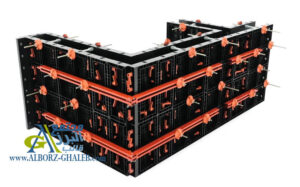
Short answer: Plastic concrete formwork is a modular system of engineered panels made from ABS, reinforced polypropylene or polymer composites, locked together with lightweight connectors to shape fresh concrete until it sets — doing the same job as steel formwork at roughly a quarter of the weight.
Quality systems are precision-moulded, so panel dimensions are highly consistent and joints stay tight against cement-paste leakage. Typical panel weight is 10–16 kg per square metre, versus roughly 40 kg/m² for steel panels of similar size — a difference that changes how a whole site is staffed. Like steel systems, polymer formwork is modular: wall panels, inner/outer corners, and hand-locked connectors, no welding on site. For a broader conceptual overview of formwork systems, the formwork article on Wikipedia is a useful neutral reference.
Where Plastic formwork wins on site
Short answer: Polymer formwork wins on weight (3–4× lighter), installation speed, release quality without form oil, rust-proof storage, and natural thermal insulation that helps concrete cure properly in cold weather — cutting the real cost per cycle on suitable projects.
Weight is a payroll issue
One worker carries a standard plastic panel; steel panels often take two workers or a crane. On jobs where panels move between floors by hand, that single fact can cut formwork labour hours noticeably and reduce handling injuries.
No oil, no sticking, no finishing repairs
Polymer faces barely bond to concrete. Stripping is clean, the finish is smooth enough for exposed-concrete looks, and you delete the release-oil budget plus the labour of scraping and oiling steel faces between cycles.
Weather stops being a storage problem
Steel formwork stored outdoors rusts and needs anti-corrosion treatment before reuse; plastic panels shrug off rain and humidity. For small outfits without covered yards, maintenance cost simply disappears.
A built-in winter advantage
Plastic conducts heat poorly, so it doesn't pull warmth out of fresh concrete the way cold steel does — a genuine curing advantage in cold-weather concreting, a topic the American Concrete Institute (ACI) treats as a formal discipline with its own requirements.
Real user question: How many times can plastic formwork actually be reused?
The honest answer: it depends on panel grade, handling and storage — anyone quoting a single number is selling something. Quality ABS panels from reputable makers typically deliver 50–100 cycles under disciplined use. The same panel, stripped with a hammer, stored in direct summer sun, or overloaded with pour pressure, may warp below 20 cycles. Good steel formwork, maintained properly, runs several hundred cycles and retains scrap-steel value at end of life. So don't buy the number on the brochure: ask the supplier for a written cycle warranty and its conditions, verify the material grade, and compare offers on a "cost per cycle" basis — the math below shows you how.
Where steel formwork still wins
Short answer: Steel wins on lateral pressure capacity (tall walls, fast pours), impact tolerance, total service life measured in hundreds of cycles, heat and UV indifference, and residual scrap value — making it the rational choice for heavy civil works and multi-project contractors.

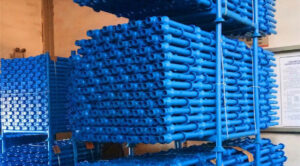
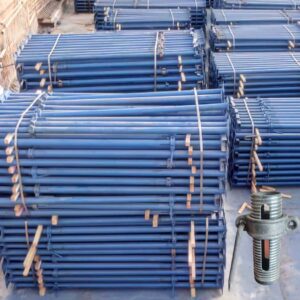
- Lateral pressure: Fresh concrete acts as a fluid; on tall single-lift pours hydrostatic pressure can buckle light panels. Properly tied steel formwork handles it with margin.
- Impact and abuse: Steel deforms and can be re-flattened; plastic cracks. Rough sites punish plastic quickly.
- Heat and UV: Steel doesn't care about a sun-exposed yard; polymers age and creep under sustained heat.
- End-of-life value: Worn steel is sellable scrap. Worn plastic panels recover value only if a recycling stream exists.
Plastic vs. steel formwork: side-by-side comparison
Short answer: Plastic leads on weight, speed, maintenance, surface finish and cold-weather behaviour; steel leads on durability, cycle count, pressure capacity and residual value — and the upfront price gap only makes sense after converting both into cost per reuse cycle.
| Criterion | Plastic / Polymer Formwork | Steel Formwork |
|---|---|---|
| Weight per m² | ≈ 10–16 kg | ≈ 40 kg |
| Setup & stripping speed | High, no crane needed | Moderate, sometimes equipment |
| Realistic reuse cycles | 50–100 (grade & care dependent) | Several hundred with maintenance |
| Lateral pressure capacity | Moderate; limited lift heights | High; tall walls & columns |
| Release oil required | None or minimal | Mandatory |
| Concrete surface finish | Smooth, uniform, oil-stain-free | Good; depends on sheet & weld condition |
| Storage & moisture | Rust-proof; simple yard storage | Needs anti-rust & dry storage |
| Cold-weather behaviour | Insulating; healthier curing | Conducts cold into fresh concrete |
| Heat & UV exposure | Warping risk in sunny storage | No significant limit |
| Impact sensitivity | High; crack/break risk | Low; repairable deformation |
| Repairability | Plastic welding / panel swap | Steel welding & flattening |
| Upfront price | Lower | Higher |
| Residual value | Low (recycling-dependent) | High (scrap steel) |
The only cost calculation that matters: cost per cycle
Short answer: Divide the purchase price by the realistic number of reuse cycles, then add cleaning, oil, repair and storage costs per use. Plastic panels usually win this equation on light-to-medium duty projects; steel wins it back on high-cycle, high-pressure work with resale of the asset at the end.

| Worked example (per 100 m² of formwork) | Polymer system | Steel system |
|---|---|---|
| Illustrative purchase cost | Lower (index 100) | Higher (index ~150–170) |
| Realistic cycles | 60 | 300 |
| Capital cost per cycle | ≈ 1.67 | ≈ 0.55 |
| Oil & cleaning per cycle | Minimal (water wash) | Release oil + scraping labour |
| Handling labour per cycle | Low (1 worker) | Higher (2 workers/equipment) |
| End-of-life recovery | Low | Scrap value offset |
The index numbers above are illustrative, not market quotes. Replace them with your supplier's written prices and cycle warranties — the structure of the calculation is what transfers to any market.
Real user question: Is plastic formwork safe for tall columns and walls?
Safe when engineered, risky when improvised. Fresh concrete lateral pressure grows with height and pour rate. The disciplined approach: pour in 30–50 cm layers at controlled speed, vibrate properly but not excessively, space ties and connectors exactly per the manufacturer's table, and split very tall lifts into stages. If your design demands single-lift tall shear walls or columns, steel formwork is simply the correct tool. Reputable suppliers will run this check against your drawings before quoting — a genuine technical consultation, such as the one offered when you request a formwork system recommendation based on your drawings, prevents the most expensive mistake on this list.
Five buying and execution mistakes to avoid
Short answer: Buying on price alone, ignoring material grade, rough stripping, sun-exposed storage, and exceeding pressure limits are the five mistakes that quietly destroy the economics of plastic formwork.
- Grade-blind purchasing: cheap recycled-material panels die in the first cycles — the most expensive panels you'll ever buy.
- Hammer stripping: polymer panels release with gentle leverage; impact means cracks.
- Sun-yard storage: shade and flat stacking add years of UV life.
- Ignoring pour rate: lateral pressure is the invisible enemy of light formwork.
- Mixed or substandard connectors: great panels with bad locks leak grout and leave steps in the finish.
Maintenance that doubles service life
Short answer: Water-wash after every pour, strip gently, store flat in shade, inspect connectors routinely, and pull damaged panels out of rotation for plastic-weld repair — simple discipline that keeps polymer formwork near its rated cycle life.

If your workload is seasonal, used-equipment marketplaces can reset the math entirely: buying inspected second-hand formwork from a specialist marketplace and reselling after your project can cut net formwork cost to a fraction of new. And for authoritative technical background on concrete itself — mix behaviour, curing, cold-weather practice — the The Constructor civil-engineering library is a solid practitioner reference alongside ACI guidance.
What 2026 is changing in formwork decisions
Short answer: Recycled-content polymer panels with verified cycle warranties, hybrid plastic-face/steel-frame systems, digital pour-planning tools, and labour-cost inflation are pushing more mid-size projects toward polymer systems — while heavy civil works keep steel firmly in place.
Watch for fibre-reinforced composite panels closing the strength gap at the light end, and for procurement rules that increasingly score recycled content and end-of-life take-back programs. The smart move for 2026 tenders: ask suppliers for verified cycle data and recycling commitments in writing, whatever material you choose. Companies like Alborz Ghaleb, which manufacture both steel and polymer systems under one roof, are structurally well-positioned to advise without one-sided bias.
Frequently Asked Questions
Is plastic or steel formwork better for concrete?
How much cheaper is plastic formwork than steel?
Can cracked plastic formwork panels be repaired?
Is plastic formwork suitable for foundations?
Should I buy used formwork or new?
Is plastic formwork environmentally friendly?
Bottom line: plastic and steel formwork aren't rivals for the same job — they're complements. Run the cost-per-cycle math against your real drawings and climate, enforce pour discipline whichever system you buy, and treat vendor cycle claims as negotiable until they're in writing.
Still torn between plastic and steel?
Send us your drawings or item list — our technical team will calculate cycle counts, the right system, and cost per cycle for your project.
Contact Alborz Ghaleb for a formwork consultation


Your opinion matters to us
Share your experience and thoughts with us and other users
No comments yet. Be the first!