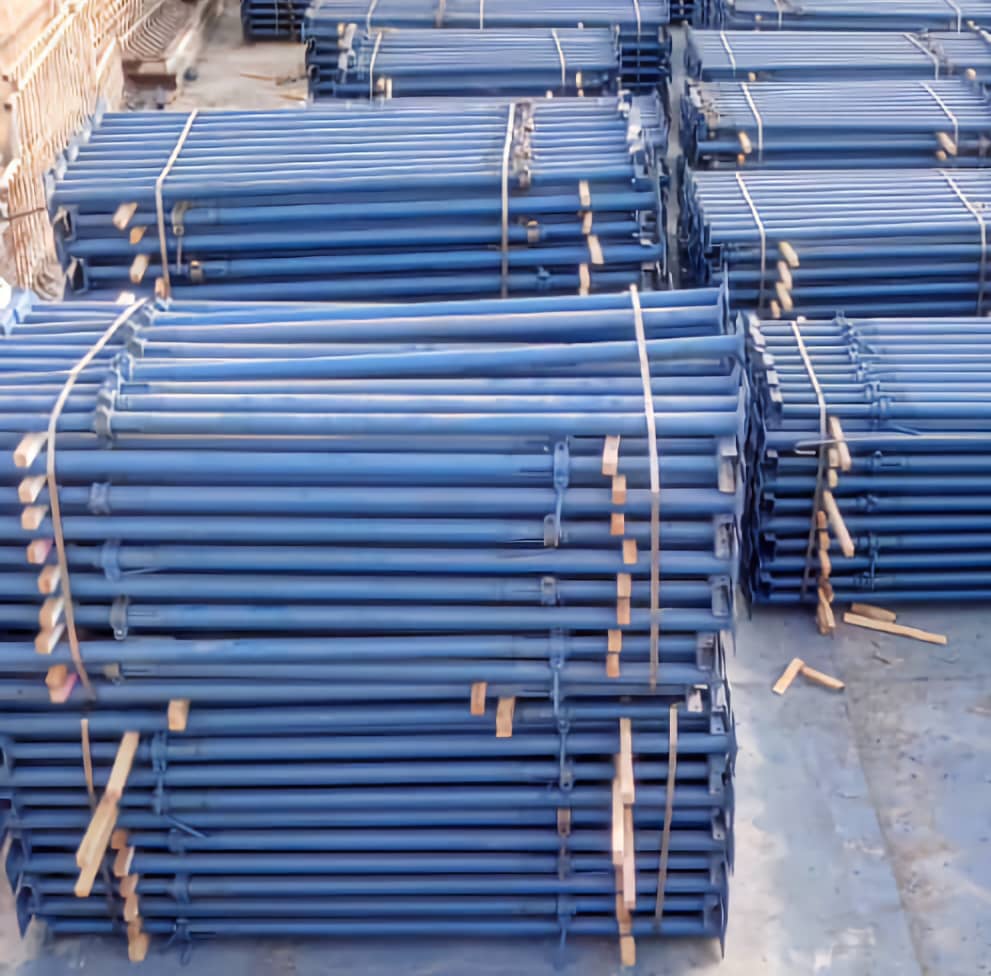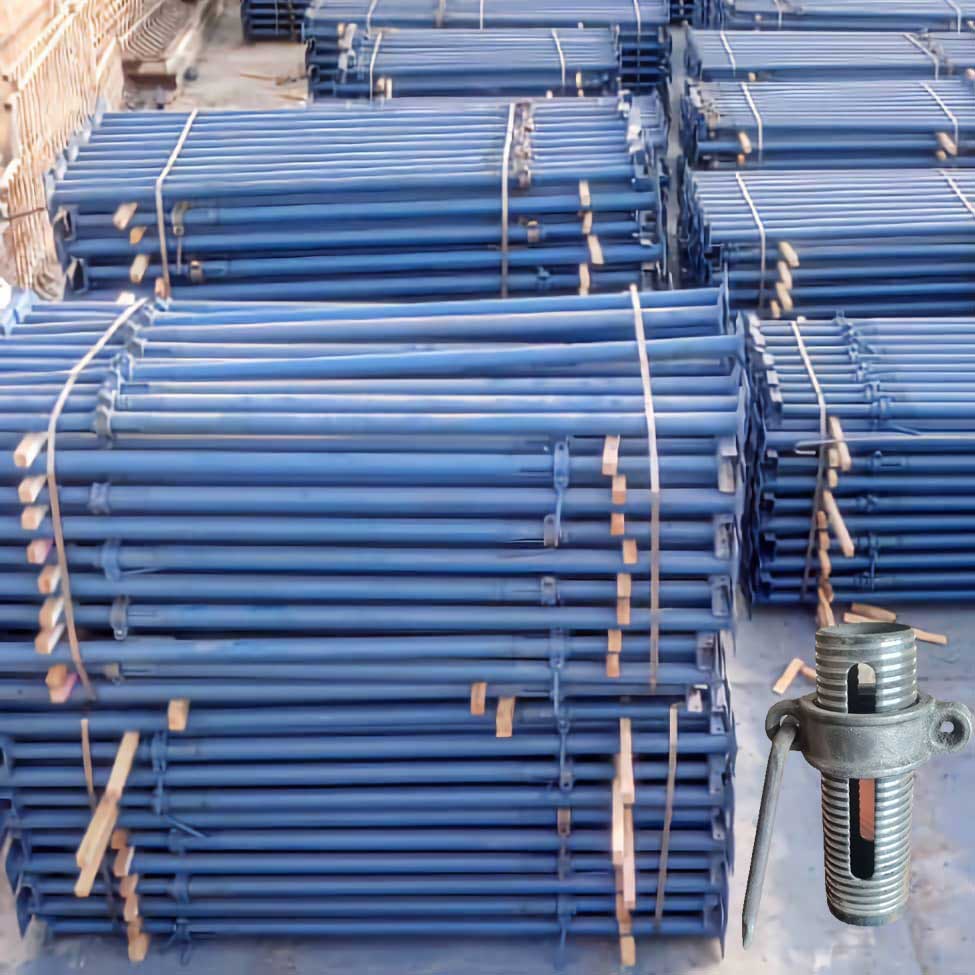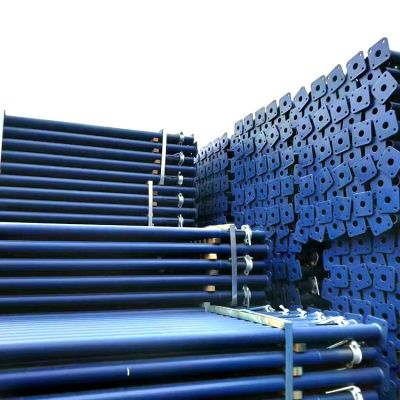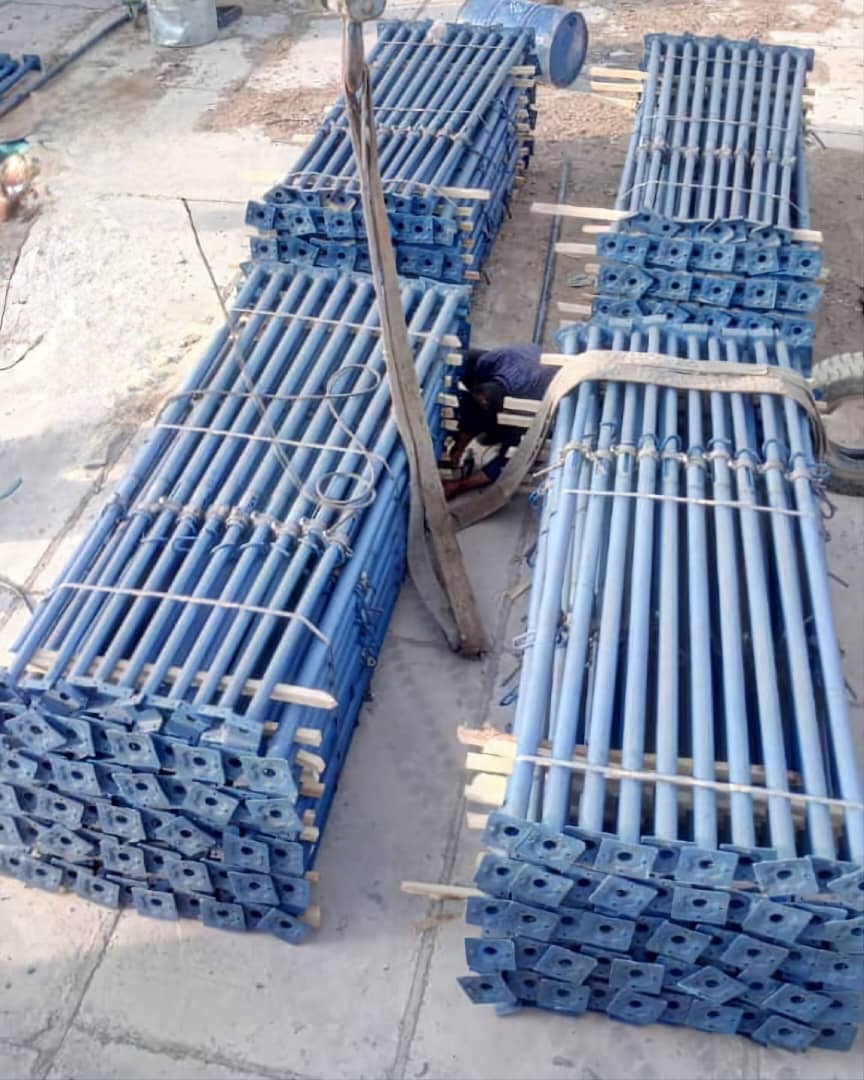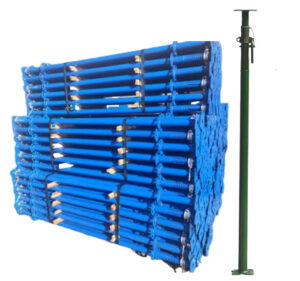
Have you ever wondered how today's tall buildings rise without accidents and with complete safety? The answer lies in a simple yet vital tool: the prop jack (adjustable steel prop). This steel component, plain as it may look, is the backbone of every concrete construction project.
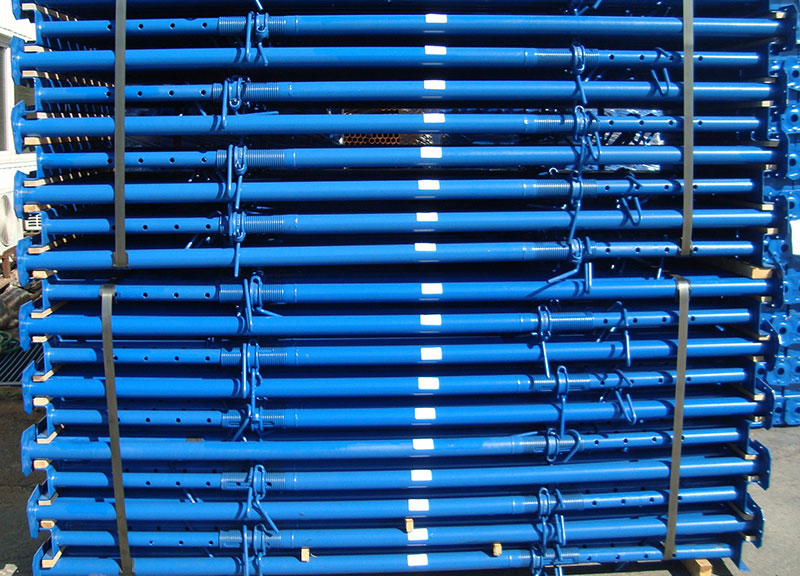
The prop jack — also known as a shoring prop, telescopic steel prop or metal post — is like a faithful guard that carries the entire weight of the slab during the critical stages of construction. Every type of slab — block-joist, composite deck, lightweight, polystyrene and more — must be temporarily supported, and steel props are one of the best and fastest ways to do it. Without this tool, none of today's concrete slabs could be built.
History and evolution
In the past, builders used timber posts to hold slabs. That method was dangerous, costly and slow. With the rise of industry and steel as a primary building material, the prop jack was born — and today it has evolved into many types for diverse applications.
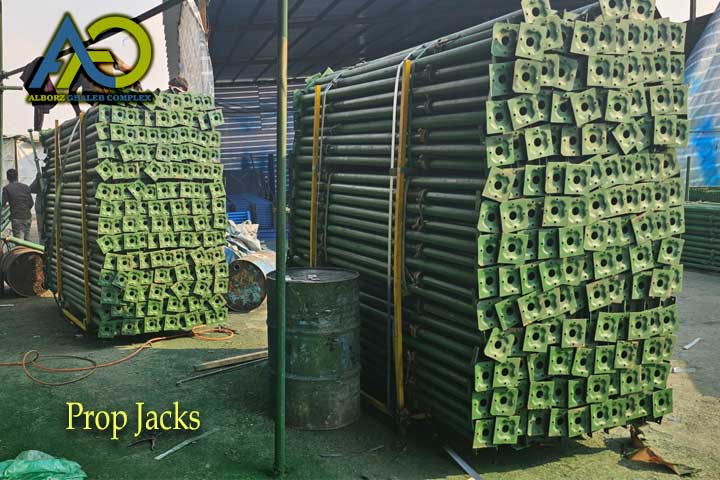
Prop Jack Price List and Weight Table
Cross-head construction prop jacks produced by Alborz Ghaleb in top quality and various weights — one of the most essential formwork tools in concrete construction. Prices follow the steel market daily; ask for today's quote:
| Type | Height | Tube wall (top, bottom) | Weight | Daily price |
|---|---|---|---|---|
| Light prop jack | 3.5 m | 2 , 2 mm | 13 kg | Instant quote |
| Medium prop jack | 3.5 m | 2 , 2.5 mm | 14 kg | Instant quote |
| Heavy prop jack | 3.5 m | 2.5 , 2.5 mm | 15 kg | Instant quote |
| Light prop jack | 4 m | 2 , 2 mm | 14 kg | Instant quote |
| Medium prop jack | 4 m | 2 , 2.5 mm | 15.6 kg | Instant quote |
| Heavy prop jack | 4 m | 2.5 , 2.5 mm | 16.7 kg | Instant quote |
| Heavy prop jack | 5 m | 2.5 , 2.5 mm | 19.7 kg | Instant quote |
| Heavy prop jack | 6 m | 2.5 , 2.5 mm | 24 kg | Instant quote |
💡 Custom heights and 20 cm threads are also produced on order.
What Is a Prop Jack? Full Definition and Importance
A prop jack is a steel tool that bears the slab load and holds it in place during the early stages of construction. It plays a key role in heavy concrete structures: from cross-head props supporting block-joist and waffle slabs to telescopic props for height adjustment on industrial projects, these tools have replaced traditional timber posts.
At Alborz Ghaleb we focus on producing prop jacks from quality raw materials such as standard steel, delivering tough, reliable products that cover small to large projects. With height adjustability, fast erection and high strength, our props help contractors execute safer and more efficient projects — preventing slab collapse while cutting cost and construction time.
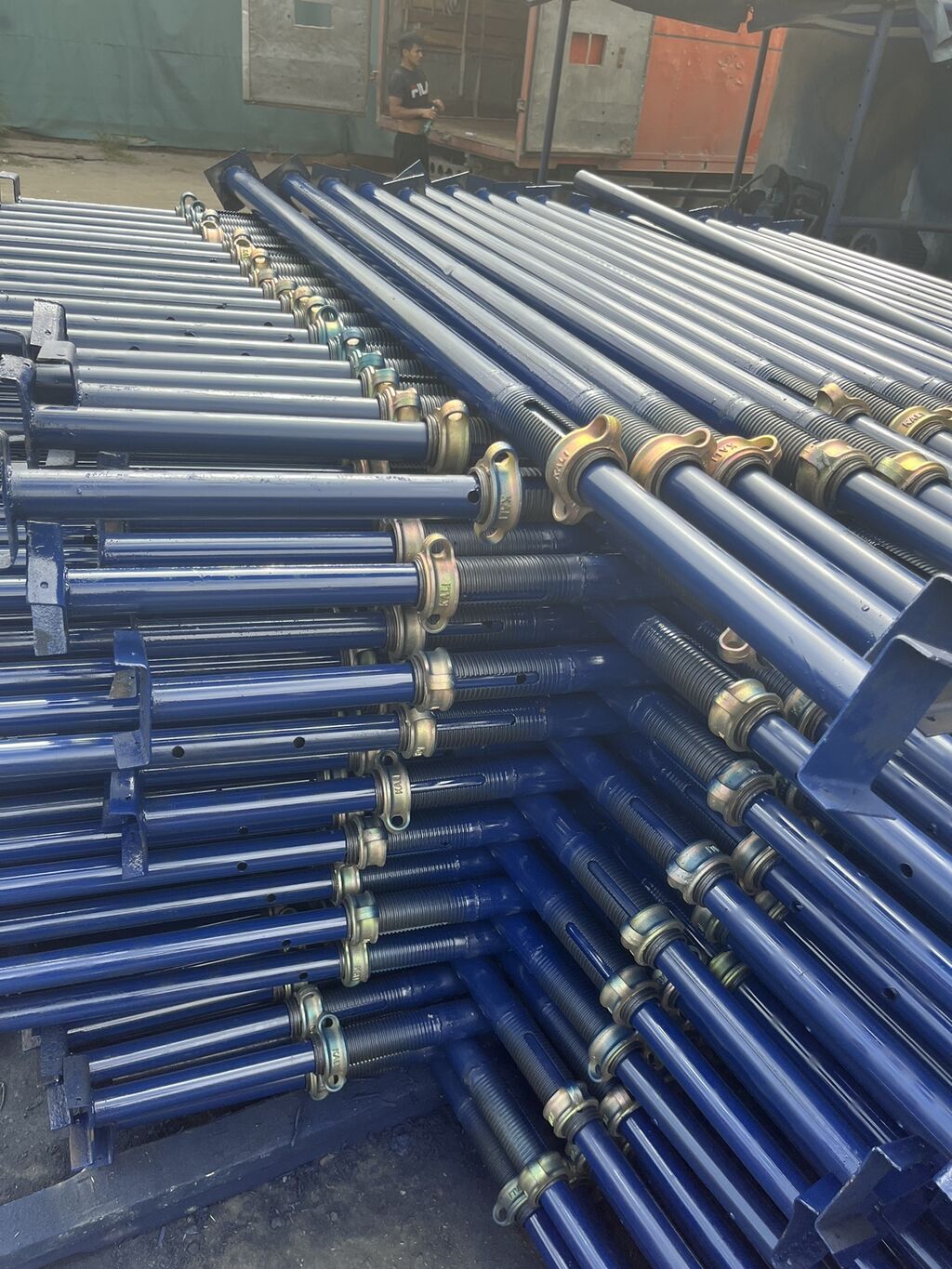
Props are made in various heights; load capacity depends on the minimum (closed) height, maximum (open) height and the wall thickness and diameter of the tubes. The built-in nut (prop sleeve nut) at the middle of every prop allows fine height adjustment anywhere between minimum and maximum.
Types of Construction Props: Cross-Head to U-Head
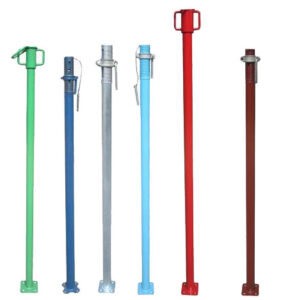
1) Cross-head (fork-head) prop
The most widely used type, with a steel cross on top supporting joists and slabs.
- Specs: standard heights 3.5–6 m, tube wall 2–3 mm, weight 12–26 kg;
- Pros: wide coverage, suits heavy slabs, easy erection, fine adjustment, high strength;
- Uses: concrete slab shoring, residential and commercial jobs, multi-storey and industrial projects.
2) Plain-head prop (no cross)
- Specs: heights 3–5 m, wall 1.8–3 mm, weight 10–13 kg;
- Pros: multi-purpose, light projects, lower cost;
- Uses: wall and column support, shallow excavation shoring.
3) U-head prop ("Iraqi" type)
Named after its large export volume to Iraq; a U-shaped head sits on top.
- Specs: adjustable 3–4.5 m, wall 2.5 mm, weight 14–16 kg;
- Pros: fast erection, high load capacity, suited to industrial projects;
- Uses: steel-deck and concrete slab support.
4) Push-pull / plumb prop
- Specs: heights 3–4 m, wall 2.5 mm;
- Pros: extra stability for special structures;
- Uses: bridge building and complex structures — used to plumb and stabilise walls and columns.
Weight classes: light, medium and heavy duty
| Class | Tube wall | Weight | Load capacity | Use |
|---|---|---|---|---|
| Light (economical) | 2 mm | 9–14 kg | up to 1,200 kg | small residential, light slabs, tight budgets |
| Medium (price/quality balance) | 2 & 2.5 mm | 14–16 kg | up to 1,400 kg | balanced price, wide application |
| Heavy (maximum strength) | 2.5 mm | 15–24 kg | up to 1,500 kg | industrial, high-rise, thick concrete slabs |
Head designs: fixed cross vs swivelling T
Fixed-cross props are the simplest and most common: the cross is welded solid and the mid-thread adjusts the height, covering a wide area of joists and slab — though the fixed head limits flexibility in special geometries. Swivelling T-head props have a movable head that rotates to odd angles for more versatile structures; some engineers note the movable joint can slightly reduce maximum load, but it widens the range of structures one prop can serve.
Types of Adjustable Prop Jacks at Alborz Ghaleb — Full Specs
We produce a variety of prop jacks tailored to specific needs. Here's a detailed breakdown:
U-Head prop jacks
Adjustable steel props with a U-shaped head, ideal for supporting beams or other structures with a flat surface.
- Design: U-shaped steel head (e.g. 10×15 cm) welded to the top tube;
- Applications: flat surfaces like beams or slabs in formwork systems;
- Specs: heights 2–5 m, weights 12–20 kg, load capacity 1,500–2,500 kg;
- Pros: perfect fit under beams, easy to align; Cons: less versatile for non-flat surfaces;
- Example: used on a 300 m² slab project in Isfahan — installed in 3 hours.
T-Head prop jacks
- Design: T-shaped head (e.g. 12 cm wide) for flexible support;
- Applications: supports beams or roofs without needing a horizontal base;
- Specs: heights 2.5–4 m, weights 15–17 kg, load capacity 2,000 kg;
- Pros: great for unconventional setups; Cons: slightly heavier than standard props;
- Example: stabilised a 50-metre bridge deck in Ahvaz, 2023.
Standard adjustable props
The most commonly used type: a steel tube with an adjustable screw thread that lets the height be set to suit the specific application.
- Design: simple telescopic tube with screw thread or pins;
- Applications: general support for slabs, walls and columns;
- Specs: heights 2–4 m, weights 10–12 kg, load capacity 1,200 kg;
- Pros: affordable, widely applicable; Cons: limited to lighter loads;
- Example: used in a villa renovation in Shiraz, 2022.
Push-Pull prop jacks
Adjustable steel push-pull props are designed for holding and plumbing single- and double-faced forms. The lower plate is fixed to a ground anchor and the top plate to the shutter. Push-pull props — sometimes known as tilt-panel braces — have swivel heads that support both vertical and horizontal loads. The design includes the standard prop collar plus an additional locking collar for rigidity and maximum safety, supplied in an extra-strong heavy-duty build with robust swivelling plates on both inner and outer tubes and high-tensile bolts for maximum load capacity.
- Design: swivel heads with dual collars and high-strength bolts;
- Applications: wall formwork, tilt panels and heavy shoring;
- Specs: heights 3–6 m, weights 20–25 kg, load capacity 3,000 kg;
- Pros: supports vertical and horizontal loads, ultra-rigid; Cons: higher cost due to the complex design;
- Example: secured a 10-metre retaining wall in Mashhad, 2024.
Features that set our props apart
- Height flexibility: adjust from 2 to 6 m with precision threads or pins (10 cm increments);
- Telescopic build: seamless inner/outer tube design ensures stability under load;
- Load strength: heavy-duty models handle up to 3,000 kg — enough for a 10 cm thick, 12 m² slab;
- User-friendly: setup takes under 5 minutes per jack, even for novices;
- Durability: ST37 steel with electrostatic paint resists rust and wear for 5+ years.
Full Prop Specifications by Size
Light 3.5 m prop
Top: size-5 (scaffold) tube, 2 mm wall. Bottom: size-6 tube, 2 mm wall. 17 cm thread and 30×50 profile (2 mm) cross-head. Weight: 13 kg — small and medium projects.
Medium 3.5 m prop
Top tube 2.5 mm, bottom tube 2 mm. Weight: 14.2 kg — semi-heavy work.
Heavy 3.5 m prop
Both tubes 2.5 mm + 17 cm thread + 30×50 (2 mm) head. Weight: 15 kg.
Light 4 m prop
For taller floors. Weight: 14.6 kg.
Medium 4 m prop
Top 2 m × 2.5 mm, bottom 2 m × 2 mm, 17 cm thread. Weight: 15.6 kg.
Heavy 4 m prop
Both tubes 2 m × 2.5 mm. Weight: 16.7 kg.
Heavy 5 m prop
Top 3 m × 2.5 mm, bottom 2 m × 2.5 mm. Weight: 19.7 kg — high-rise work.
Heavy 6 m prop
The tallest standard prop: both tubes 3 m × 2.5 mm + 17 cm thread. Weight: 23.2 kg.
Prop Jack Components and Their Roles
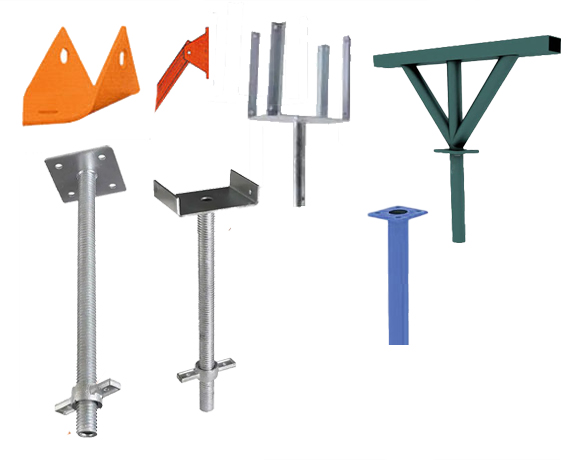
1) The head: heart of the prop
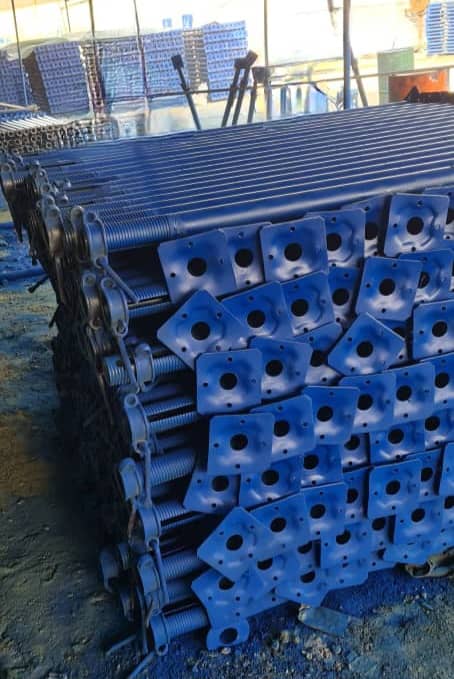
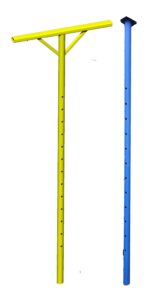
The top part may be cross, U or plain. The most common plain head is a 14×14 cm steel plate with a central hole. The popular Iranian cross-head uses a 75 cm channel fixed to the central tube by two arms for wide support. U-heads serve special and export jobs — many other head designs are produced on demand.
2) Upper (inner) tube: the strength column
A 1.2-inch tube known as size-5, cut at 2–3 m depending on prop height, drilled with holes every 10–12 cm for adjustment; the first hole sits 40 cm from the tube end. Wall thickness runs 1.8–3 mm per ordered load.
3) The thread (rolled or machined): the most critical part
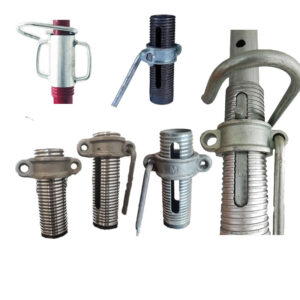
The prop thread (screw) fine-tunes the height and is made in three nut styles: handle nut, single-hole nut and pot nut. Why is it the most important part? Every kilogram of concrete pressure passes through it — a low-quality thread fails under pouring loads and causes irreparable damage. Threads come in 17 or 20 cm lengths with identical quality; 20 cm is typically used for export props, 17 cm for the domestic market.
4) Lower (outer) tube and base plate
Built from a base plate, a 6 cm diameter tube (length per order) and the thread. Wall 1.8–3 mm. The base plate spreads the load and stops sinking in soft ground; the adjusting nut locks the thread at the set height. Thread and tube quality decide pouring-pressure capacity and structural safety.
Benefits of Prop Jacks on Construction Projects
Technical benefits
- Height adjustability: adapts to different slabs, precise setting per project, variable floor heights;
- High strength: heavy loads (up to 1.5 t per standard prop), lateral pressure resistance, stability in all weather;
- Fast erection: no complex tools, less specialised labour, project time savings.
Economic benefits
- Cost savings: affordable replacement for traditional methods, reusable, lower labour cost;
- Long life: tough materials, repairable and refurbishable, high residual value.
Safety benefits
- Risk reduction: prevents slab collapse, protects workers, fewer site accidents;
- Better control: closer monitoring of the build, quick fixes, more predictable schedules.
Economic comparison (100 m² project)
| Method | Initial cost | Maintenance | Service life | Verdict |
|---|---|---|---|---|
| Prop jacks | medium | very low | ~10 years | cheapest long-term ✅ |
| Timber posts | low | high (constant replacement) | ~2 years | most expensive overall |
| Full scaffolding | high | medium | ~15 years | for combined use |
Applications Across the Construction Industry
Residential projects
From single-storey homes to multi-storey apartments: slab shoring (block-joist, waffle, polystyrene and jack-arch), balcony slabs (cantilever support) and staircases (concrete stair support).
Commercial projects
Malls, hotels and offices demand heavier loads, larger spans and faster cycles.
Industrial projects
Refineries (heavy industrial structures), power plants (thick concrete roofs) and factories (high-capacity industrial slabs).
Bridge and infrastructure works
Deck shoring (temporary deck support), heavy structures (extreme loads) and precision levelling for bridges.
Other uses
- Concrete slab support in multi-storey buildings;
- Temporary columns to stabilise walls and columns;
- Retaining support in shallow excavations;
- Temporary structures — exhibitions and events.
💡 Pair prop jacks with system scaffolding and formwork accessories from the same source for a complete shoring package.
How to Use Prop Jacks: Step-by-Step
- 1) Assess load: calculate the weight (e.g. 2,400 kg/m³ for concrete);
- 2) Choose type: match the jack to the task (U-Head for slabs, Push-Pull for walls);
- 3) Set base: place on a 20×20 cm plate on firm ground;
- 4) Adjust height: extend to the desired level (e.g. 3.5 m), lock with pins/threads;
- 5) Distribute load: centre the weight to avoid tilt (e.g. 1,000 kg evenly split);
- 6) Inspect: check for cracks or bends before every use.
Functions in construction & scaffolding
- Scaffolding support: level and stabilise platforms on slopes or uneven terrain (e.g. 5° incline);
- Height adjustment: fine-tune scaffolding or formwork heights (e.g. 2.8 m to 3.2 m in 10 minutes);
- Load bearing: support workers (avg. 80 kg) and materials (e.g. 500 kg/m² concrete);
- Safety net: prevent collapses — vital when 1 in 5 construction mishaps involve unstable supports (OSHA, 2022).
🔹 A contractor in Tabriz used 30 U-Head props to support a 400 m² scaffold, finishing a 6-storey facade in 3 weeks.
Proven results in numbers
- Safety first: collapse risk reduced by ~40% vs timber (Construction Safety Journal, 2023);
- Efficiency boost: setup time cut by 50% — 20 jacks in 1 hour vs 2 hours for wood;
- Versatility: fits projects from 50 m² homes to 5,000 m² factories;
- Cost savings: reusable for 50+ cycles — substantial savings per project vs disposable timber.
🔹 A Dubai client saved roughly $10,000 on a 1,000 m² slab project using our heavy-duty props over 6 months.
Factors to consider before loading
- Load capacity: never exceed the recommended weight limit — it compromises stability;
- Even distribution: spread the weight evenly to prevent leaning or tilting;
- Regular inspection: watch for wear, damage or deformation; replace faulty props immediately;
- Stable ground: always place the prop on a stable, level surface.
How Many Prop Jacks Does Your Slab Need?
Worked example: a 100 m² residential block-joist slab → 1 m standard spacing → 100 props + 10% safety margin = 110 props.
The simple rule is not enough by itself — several factors refine the exact count:
- 1) Slab type: block-joist 80–100 cm spacing; solid slab 60–80 cm; waffle slab 100–120 cm;
- 2) Slab thickness: 15 cm — lower density; 20 cm — medium; 25+ cm — high density;
- 3) Span: short (to 4 m) normal spacing; medium (4–6 m) spacing −20%; long (6+ m) spacing −30%.
Layout tips
- Regular pattern: equal spacing, all props levelled, even load distribution;
- Critical points: denser around columns, tighter near walls, special attention mid-span.
Our engineers calculate the exact count from your drawing — free of charge.
How to Choose the Right Prop Jack
Step 1 — define your needs
Key questions: project type (residential/commercial/industrial)? Floor height? Approximate slab weight? Available budget?
Step 2 — pick the type
- Small projects: light 3.5 m prop, cross or plain head, 2 mm wall;
- Medium projects: medium 4 m prop, cross head, mixed 2/2.5 mm walls;
- Large projects: heavy 4 m+ prop, cross head, 2.5 mm wall.
Step 3 — verify quality
- Signs of quality: grade-one steel, clean uniform welding, anti-rust paint, maker's quality certificate;
- Red flags: thin or seamy tubes, weak welds, dimensional mismatch, unreasonable pricing.
Comparison with other support methods
- Prop jack vs timber post: steel is more durable, adjustable and safer; timber is cheaper but unstable;
- Cross-head vs plain head: cross-head suits wide slabs; plain is more versatile and cheaper;
- U-head vs telescopic: U-head shines on industrial jobs; telescopic on high-rise structures.
The balance of performance, safety and cost makes the prop jack the ideal choice for modern projects.
Production and Factory-Direct Sales
At Alborz Ghaleb, prop jacks are produced from quality steel tubes and sheets (such as Mobarakeh steel) to international standards:
- 1) Cutting & preparation: precise CNC cutting of tubes and sheets;
- 2) CO2 welding: strong joints for higher strength;
- 3) Painting: anti-rust coating against moisture and corrosion;
- 4) Quality control: load, tensile and safety testing before release.
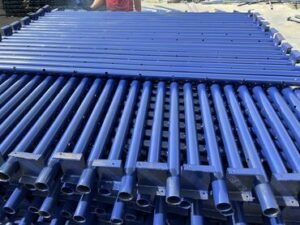
Props come in light (2 mm wall, 13 kg) and heavy (2.5 mm wall, 14–17 kg) versions; heavy props use 2.5 mm walls on both tubes for extra strength, while light props pair a 2 mm upper with a 2.5 mm lower tube. Custom heights (5 or 6 m) are available. Selling runs both new and verified used — a damaged or fatigued used prop can cause serious problems for the buyer, so insist on inspected stock such as our used marketplace listings.
We also export: U-head ("Iraqi") props with 20 cm threads ship to Iraq and the region with official documents. Order concrete formwork and prop jacks together and secure your whole project from one source.
What Drives the Prop Jack Price + Buying Checklist
- Type: cross-head costs more than plain head;
- Height: 4 m props cost more than 3.5 m;
- Tube wall: heavy (2.5 mm) above light (2 mm);
- Condition: new above used;
- Order volume: bulk orders (50+ units) earn discounts;
- Market swings: steel prices feed straight into the final cost.
Buying checklist
- 1) Material quality: standard, tough steel;
- 2) Load rating: matched to the structure (e.g. 1.5 t for a standard prop);
- 3) Condition: used props free of corrosion and damage;
- 4) Height: suited to the floor height;
- 5) Seller support: professional advice and after-sales service.
Why Alborz Ghaleb?
- Experience: years of construction-equipment manufacturing;
- Guaranteed quality: premium raw materials, standardised production;
- Product range: new and used props in all heights and walls;
- Professional support: free consultation and after-sales service;
- Nationwide delivery and export to Iraq, Turkey, Armenia, Russia and CIS.
Prop Jacks — FAQ
How much does a prop jack cost?
Light, medium or heavy — what's the difference?
How many props per square metre?
Cross-head vs plain head?
What is the U-head ("Iraqi") prop?
Why is the thread the most critical part?
What is the standard height? Do you make custom sizes?
Should I buy new or used props?
How much load can a prop carry?
Do you deliver nationwide and export?
Get Your Project's Prop Jacks Factory-Direct Today
Send your slab area and floor height — our experts pick the class (light/medium/heavy), the right height and the exact count, and return an official proforma. Direct production + verified used + threads and spares + worldwide shipping.