



Modular Steel Formwork: Manufacturing, Prices & Direct Factory Purchase
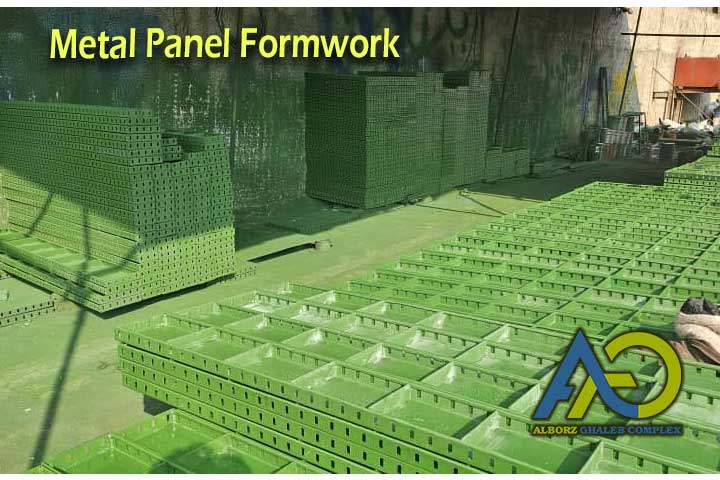
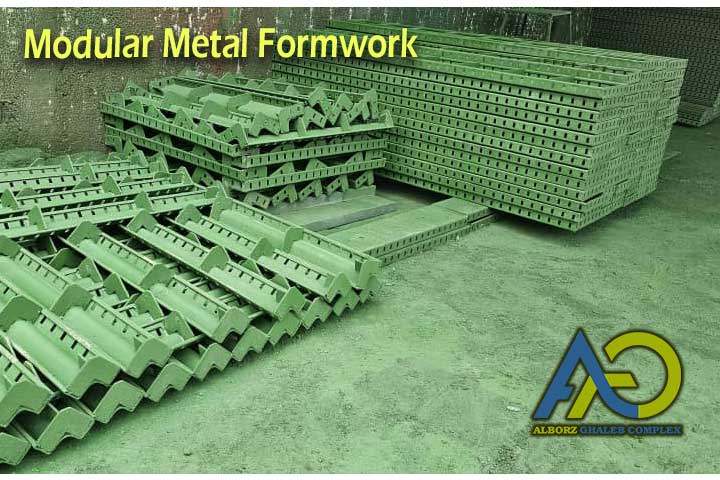
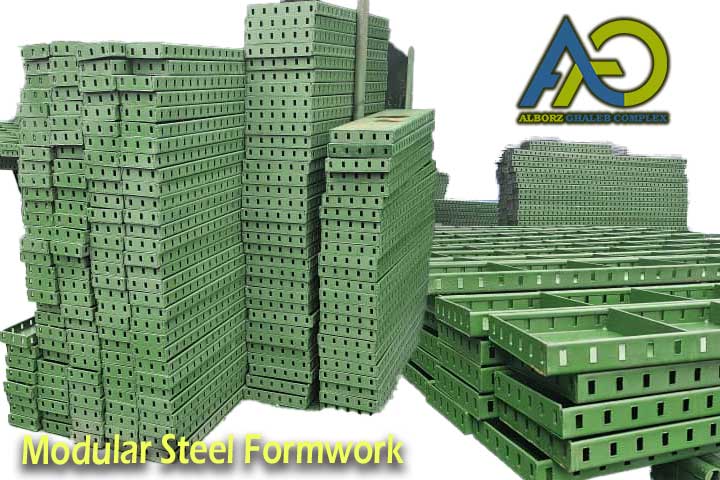
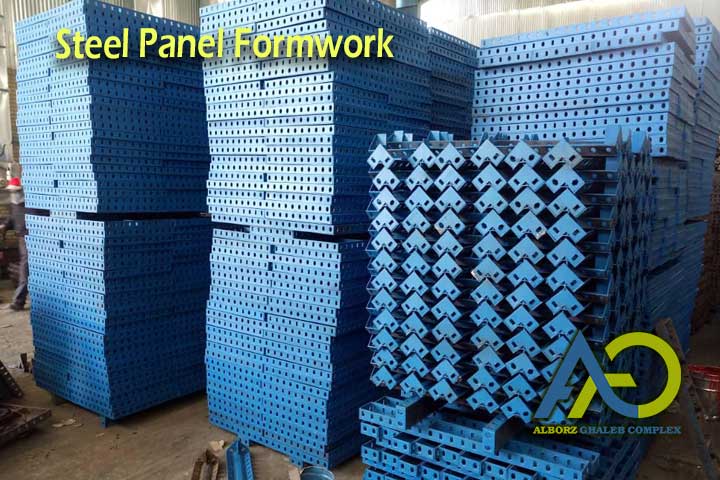
In construction, almost every tool you buy depreciates — except one: steel concrete formwork. Experienced contractors know that buying steel formwork is like buying gold bullion or land. These tough steel panels survive hundreds of pours and hammer blows, and at the end of the project they still return a large share of your capital as second-hand panels or even scrap steel.
But is every product worth buying? Certainly not. The gap between a precision-engineered panel made of Mobarakeh ST37 sheet and a crooked bazaar-grade panel that warps after two uses is enormous. At Alborz Ghaleb we believe modular steel formwork is the backbone of every construction site — whether you are casting a tower foundation or the shear walls of a pool, the final structure is only as good as these steel panels.
Standard Panel Sizes & Price by Sheet Type
Modular panels are produced in widths of 10–50 cm (5 cm steps) and lengths of 50 / 100 / 150 / 200 cm, plus custom sizes on request:
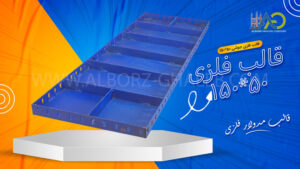
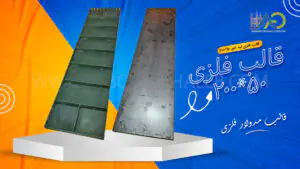
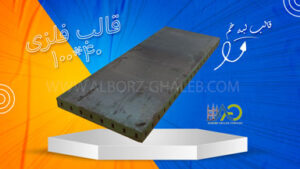
Steel formwork price depends on the sheet used. Because of daily steel-market volatility, contact us for an exact quote:
| Formwork type | Sheet type | Daily price per kg |
|---|---|---|
| Welded (belt) formwork | Acid-washed | Instant quote |
| Welded (belt) formwork | West Steel (Gharb) | Instant quote |
| Welded (belt) formwork | Mobarakeh Steel | Instant quote |
| Bent-edge (pressed) formwork | Acid-washed | Instant quote |
| Bent-edge (pressed) formwork | West Steel (Gharb) | Instant quote |
| Bent-edge (pressed) formwork | Mobarakeh Steel | Instant quote |
What Exactly Is Modular Steel Formwork?
At the heart of every great concrete structure — from the shear walls of a tower to the foundation of a bridge — stands an unsung steel hero that defines the shape, accuracy and final strength of the concrete: concrete formwork. Despite newer options such as lightweight plastic formwork, steel remains the first choice of professional contractors for heavy projects. The reason fits in three words: strength, durability, flexibility.
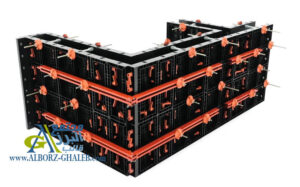
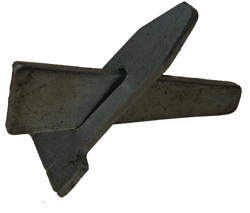
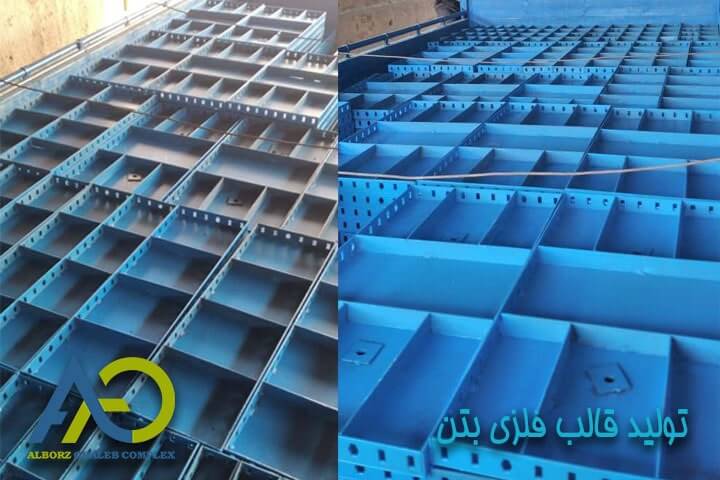
"Modular" means a standardized, repeatable system: prefabricated panels in standard dimensions (multiples of 5 cm) that connect like LEGO bricks to create any shape. The system is built on a face plate and stiffeners that resist the hydrostatic pressure of fresh concrete.
What can one set of modular panels build?
- Strip and raft foundations;
- Shear and retaining walls of any length and height;
- Square and rectangular columns;
- Slab and beam falsework;
- Walls of water tanks and silos.
Why is it the most flexible forming system?
- Corners: inside/outside corner pieces handle 90° wall angles easily;
- Connections: a rich ecosystem of pins & wedges, clamps and tie bolts locks panels together fast against massive concrete pressure;
- Scalability: combine panels horizontally and vertically to reach any wall length and height.
Production Methods: Welded-Belt vs Bent-Edge Formwork
a) Welded (belt) formwork
The traditional method: the face plate is cut and 5 mm straps are welded perpendicular around it to form the edges.
- Pros: easy repair (any site blacksmith fixes it with hammer and weld), high rigidity;
- Cons: heavier; depends on weld quality — weak welds open under concrete pressure.
b) Bent-edge (pressed) formwork
The engineered method: panel edges are bent on a press brake, so face and edge are one continuous sheet.
- Pros: smoother concrete (no edge weld seam), lighter weight, springy edges resist hammer blows;
- Cons: serious edge damage needs press equipment to repair.
| Feature | Welded (belt) | Bent-edge (pressed) |
|---|---|---|
| Weight | Heavier | Lighter |
| Price | Usually slightly cheaper | Slightly higher (press technology) |
| Edge durability | Medium (welds can crack) | Excellent (one piece) |
| Concrete finish | Standard | Excellent (exposed-grade) |
| Repairs | Easy | Specialist |
Applications + Step-by-Step Wall Forming Guide
Where modular panels are used
- Foundations: the simplest job — usually 50 cm panels laid or standing;
- Columns: flat panels + outside corners; e.g. a 40×40 column = four 40 panels + four 5×5 corners;
- Shear walls: the most demanding — tie bolts and water-stop ties are essential; crane-handling of ganged panels multiplies speed ×10;
- Smart combo: steel for walls/columns + waffle formwork for slabs is the winning formula for speed and economy. For monolithic tall walls, large-panel wall formwork and tunnel formwork push productivity further.
Seven steps to a flawless concrete wall
- 1 — Set-out: mark both wall faces on the foundation with string lines and paint; clean the area;
- 2 — First row: start at a corner, connect panels along the guide line with pins & wedges; on tall walls stagger vertical joints brick-bond style for stiffness;
- 3 — Ties: place plastic sleeves in tie holes (easy bolt removal), erect the second face, pass full-thread ties and tighten washers and nuts to lock the wall thickness;
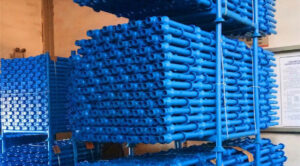
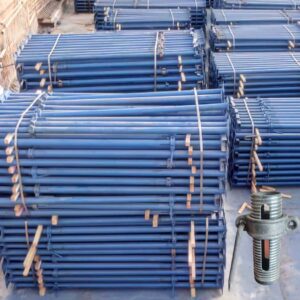
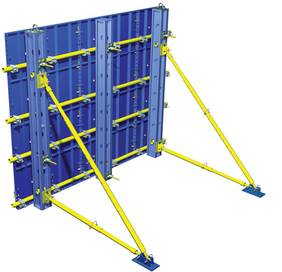
- 4 — Plumb & brace: check verticality with plumb or laser level; anchor raking props/soldiers to the ground against overturning;
- 5 — Pouring: in controlled layers; vibrate properly, avoid long vibrator contact with the panel skin;
- 6 — Striking: typically 1–3 days depending on temperature, cement and size; props first, then connections;
- 7 — Clean & store (the capital-saving step): scrape concrete immediately with a blunt scraper and wire brush, oil the faces, store dry and stacked flat.
The Economics: How to Profit from Investing in Steel Formwork
Steel formwork is not a consumable — it is a capital asset. Think long-term ROI.
New vs used
- New: guaranteed quality, 100+ pours, flawless face for exposed concrete;
- Used: lower entry price but unknown remaining life and possible deformed panels — buy only inspected stock from the Alborz Ghaleb used marketplace.
Buy or rent?
Rent if your concrete jobs are occasional; buy if you build concrete structures continuously — over time ownership is far cheaper. Total cost of ownership: a panel bought at price X and used 100 times costs X/100 per pour — you are effectively pre-buying future projects at a fraction of the price.
What moves the price per kilogram?
- Sheet source: Mobarakeh is always pricier and better than Ahvaz/Gilan sheet — uniform, smooth, ideal for exposed concrete; West Steel is fine for ordinary work like foundations;
- Weld quality: CO2 welding keeps seams from oxidising;
- Flange type: machined, square-cut straps cost more;
- 5 vs 6 cm edge: 5 cm for mid-size residential, 6 cm for dams and heavy civil works.
Steel vs plastic at a glance
Steel: extreme strength, 150-use life, survives harsh sites | heavy, needs oiling. Plastic: very light, waterproof, exposed finish | limited under heavy pressure. Full comparison: plastic polymer formwork.
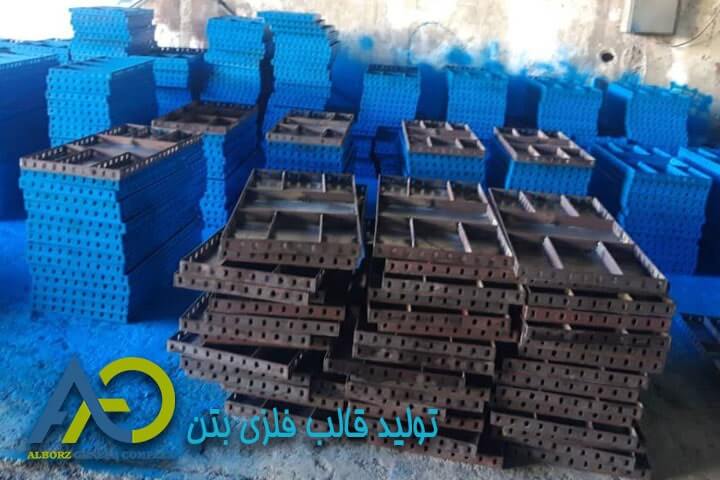
Steel Forming Systems & Production at Alborz Ghaleb
- Modular system: standard prefab parts, fast assembly, high accuracy, reusable — housing, commercial, industrial, bridges, tunnels, dams;
- Tunnel form: walls, slab and columns cast in one operation for repetitive mass housing — top speed and surface quality;
- Sliding formwork: the form travels continuously on fresh concrete — tall walls, tanks, silos;
- Climbing formwork: stage-by-stage vertical movement — high-rise cores with maximum safety and pour control.
Our production line in Karaj (Kamalshahr) manufactures modular steel, polymer and composite formwork plus custom shapes (rectangular, square, circular). Factory visits by appointment — inspect sheet, welds and true weights yourself. We export to Iraq, Turkey, Armenia, Russia and CIS countries with official documentation.
Your opinion matters to us
Share your experience and thoughts with us and other users
No comments yet. Be the first!