Tunnel Formwork: Fast, Durable Concrete Construction Solution
7 min read
106 views
Why Tunnel Formwork is a Smart Choice for Modern Construction
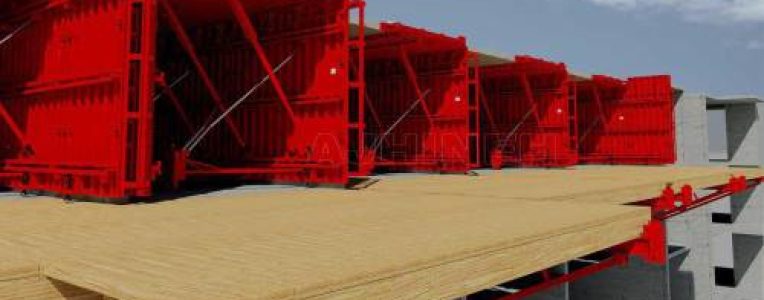
Tunnel formwork, also known as tunnel form system, is one of the most advanced concrete formwork solutions in the construction industry. By enabling simultaneous casting of walls and slabs, it delivers unparalleled speed, quality, and cost efficiency to your projects. Ideal for mass housing, hospitals, hotels, and large infrastructure like bridges and metro stations, tunnel formwork reduces construction time by up to 50% and finishing work by up to 60%. This system not only cuts costs but also provides exceptional resistance to earthquakes and fire.
In this comprehensive guide from Alborz Ghaleb, we explore everything about tunnel formwork, from its definition and benefits to execution processes, applications, and buying tips. If you’re looking to accelerate your construction projects, this article is for you. For more on other formwork systems, visit our concrete modular metal formwork page.
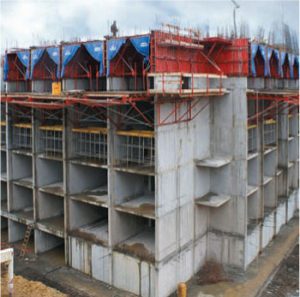
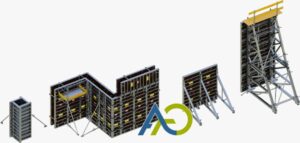
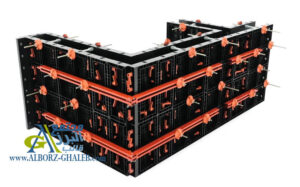
Tunnel formwork is a metal or composite-based formwork system designed for seamless concrete casting of walls and slabs in large-scale construction projects. By creating cellular (tunnel-like) structures, it allows rapid, simultaneous execution of multiple structural components. Unlike traditional formwork assembled piece by piece, tunnel formwork is integrated, enabling an entire residential unit or a significant structural section to be cast in a single 24-hour cycle.
Its repetitive and structured design makes it perfect for mass housing projects with similar layouts. For projects requiring greater flexibility, consider our modular metal formwork.
History and Evolution
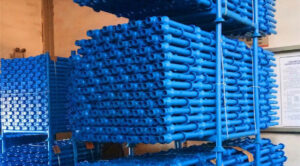
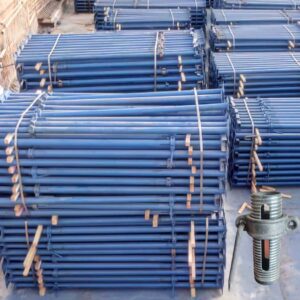
Developed in Europe during the 1960s to address mass housing needs, tunnel formwork has evolved to meet demands for faster, more cost-effective construction. In recent decades, its adoption in Iran has grown significantly, driven by companies like Alborz Ghaleb, which offer tunnel formwork solutions meeting international standards such as ISO 9001 and DIN. Learn more about our formwork equipment on our system scaffolding page.
Benefits and Limitations of Tunnel Formwork
Key Benefits
Unmatched Speed: 24-hour cycles reduce construction time by up to 50%, critical for large-scale projects.
Superior Concrete Finish: Smooth, uniform surfaces cut finishing needs by up to 60%.
Cost Savings: Reduces rebar use by 30%, labor, and finishing materials.
Earthquake and Fire Resistance: Seamless structures provide high resistance to seismic and fire hazards.
High Durability: Metal tunnel forms can be reused up to 800 times with proper maintenance.
Design is conducted using software like AutoCAD or Tekla, calculating hydrostatic concrete pressure (25–30 kN/m²) and structural dimensions. Pre-fabricated openings for doors, windows, and utilities are included.
Production
Metal panels are manufactured using CO2 welding with ST52 steel, adhering to ISO 9001 and ACI 347 standards. Polymer panels are injection-molded for specific projects.
Execution Steps
Planning: Develop architectural plans and specify openings.
Site Preparation: Level the foundation with 5 mm precision and install adjustment jacks.
Panel Installation: Transport panels via cranes (10-ton capacity) and secure with brackets and bolts.
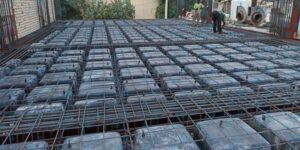
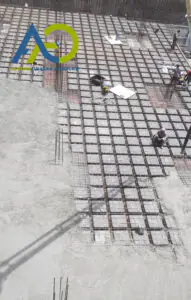
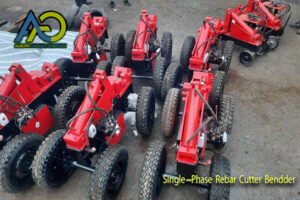
Rebar Placement: Install standard rebars (e.g., AIII) per design.
Concrete Casting: Pour C30 or C40 concrete using vibrators for uniform compaction.
Formwork Removal: Dismantle panels after 24–48 hours of initial setting.
Relocation: Move panels to higher levels using lifting hooks.
Quality Control: Verify wall alignment and surface quality, correcting defects.
With over 20 years of experience, Alborz Ghaleb is a leading tunnel formwork provider in Iran, offering:
Superior Quality: Products meet international standards.
Custom Designs: Tailored panels for unique project needs.
Expert Support: Professional consultation and training.
Competitive Pricing: High-quality solutions at affordable rates.
Projects like the Karkheh Dam and Mehr Housing testify to our commitment. Explore our modular metal formwork for more options.
Frequently Asked Questions (FAQs) About Tunnel Formwork
What is tunnel formwork, and how does it differ from large panel formwork?
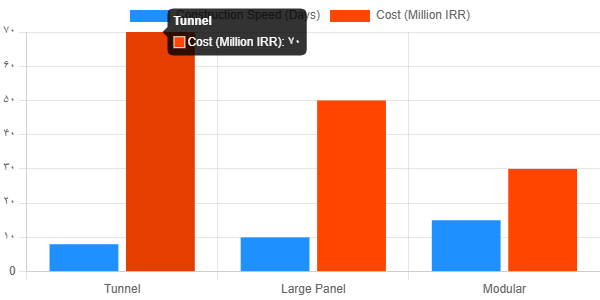
Tunnel formwork enables simultaneous wall and slab casting for repetitive plans, while large panel formwork offers more flexibility for varied layouts.
Is tunnel formwork suitable for small projects?
For smaller projects, systems/ are more cost-effective due to lower costs and lighter weight.
Check sheet thickness, production standards (e.g., ISO 9001), and after-sales support.
Is tunnel formwork reusable?
Yes, metal panels can be reused up to 800 times with proper maintenance, saving costs.
Conclusion
Tunnel formwork is a cutting-edge solution for large-scale construction, offering unmatched speed, quality, and cost efficiency. Its seamless casting, reduced finishing needs, and durability make it a top choice for modern contractors and engineers. Partner with Alborz Ghaleb to ensure your project’s success.
Your opinion matters to us
Share your experience and thoughts with us and other users
No comments yet. Be the first!