



Rebar Cutter and bender machines – Electric, Hydraulic, price
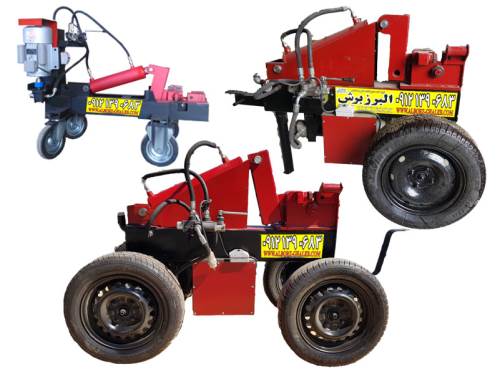
Picture casting a concrete structure with steel formwork — foundation, columns or slabs. Rebar is the lifeblood of the structure and must be prepared fast and precisely. A rebar cutter (rebar cutting machine) is the beating heart of every construction site: clean, fast cuts and bends that multiply reinforcement productivity and guarantee safety.
At Alborz Ghaleb, with more than two decades of manufacturing rebar cutters, bender-cutters and formwork equipment, we deliver durable, economical machines. This guide walks you from machine types to buying tips, prices, maintenance and standards.
Our Rebar Cutter Range
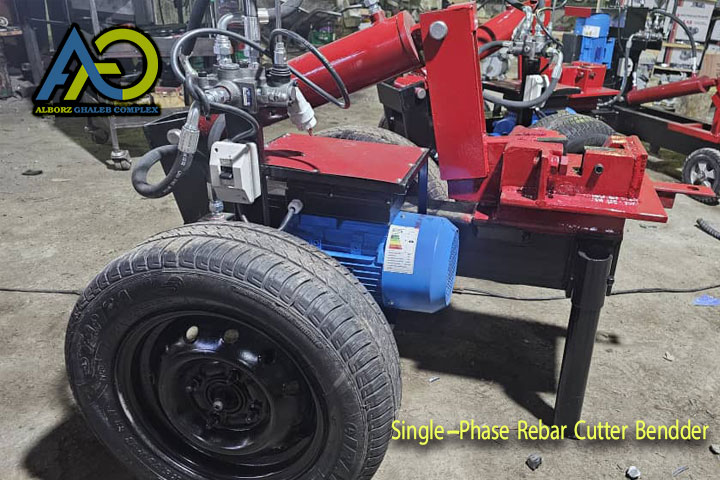
| Model | Cutting capacity | Best for | Daily price |
|---|---|---|---|
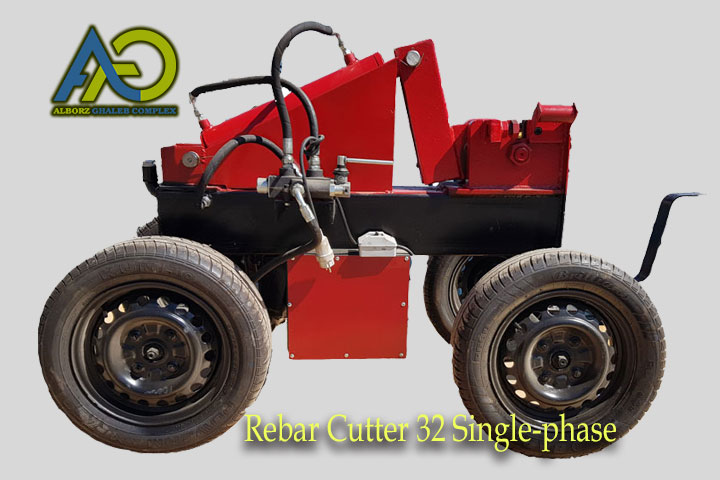
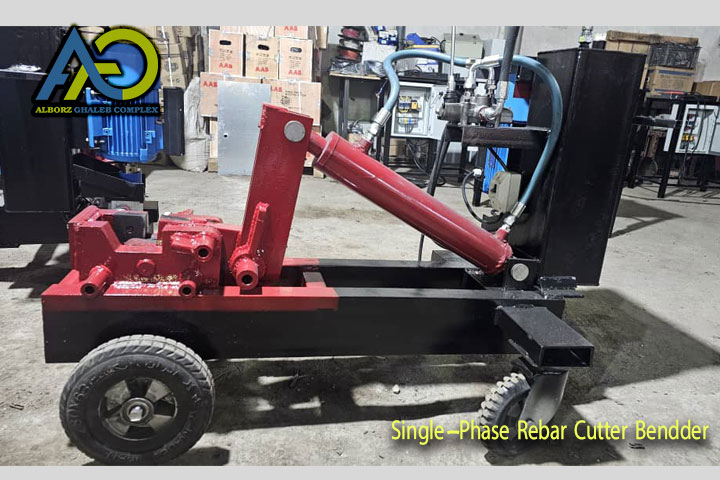
| Single-phase cutter (220 V) | up to Ø32 mm | small/medium urban sites | Instant quote |
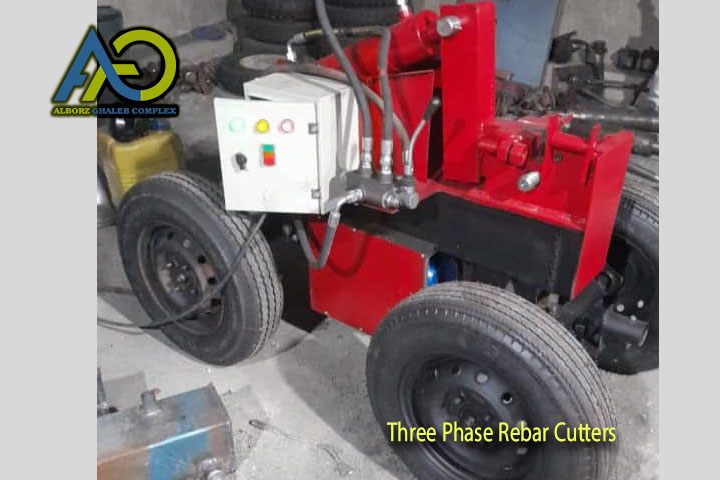
| Three-phase cutter (380 V) | up to Ø32–40 mm | continuous industrial work | Instant quote |
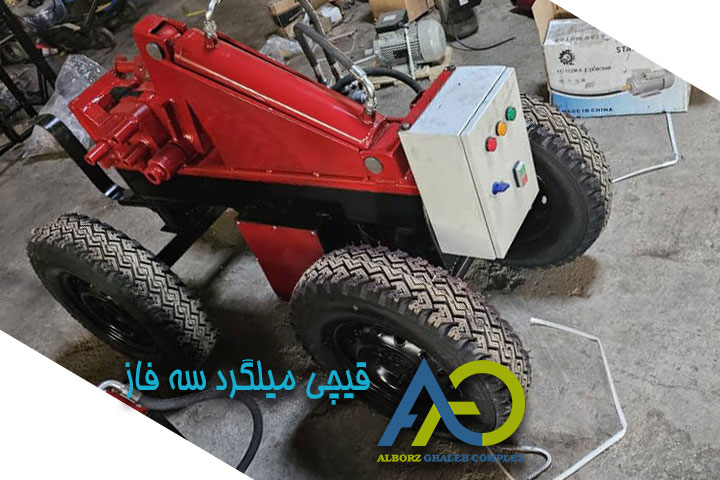
| Two/four-wheel mobile cutter | up to Ø32 mm | easy on-site movement | Instant quote |
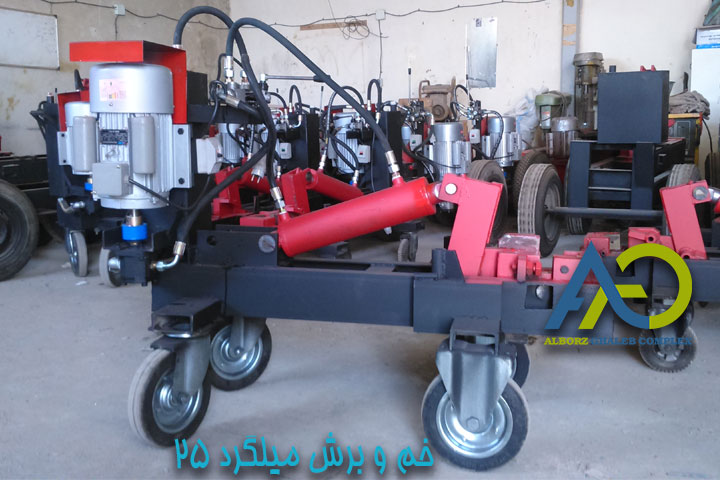
| 2-in-1 bender-cutter 25 / 32 | Ø25 / Ø32 mm | complex reinforcement work | Instant quote |
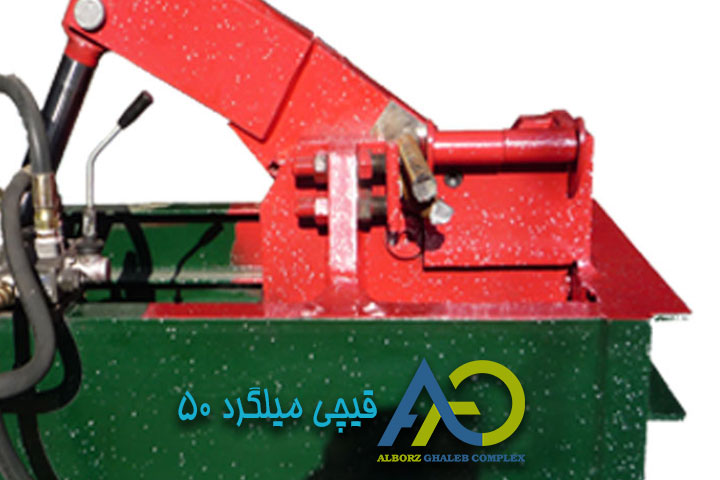
| Heavy hydraulic cutter 50 | up to Ø50 mm | bridges, tunnels, towers | Instant quote |
| Spare blades + repairs | all models | all brands serviced | Instant quote |
Buy a Rebar Cutter by Model — Dedicated Page per Machine
Click any model to see its full technical specs and price, or get an instant quote on WhatsApp:
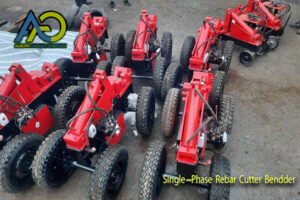
Single-Phase Rebar Cutter
220 V mains power; ideal for small and medium workshops; side bending + cutting up to Ø32 mm.
Instant price quote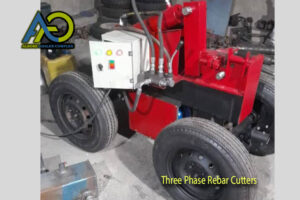
Three-Phase Rebar Cutter
380 V industrial power; higher force and speed for continuous work; cuts up to Ø32–40 mm.
Instant price quote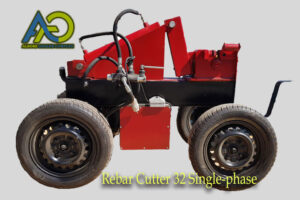
32 Rebar Cutter Four-Wheel
Industrial wheels for easy on-site movement; cuts up to Ø32 mm.
Instant price quote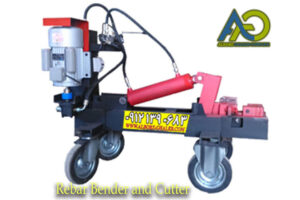
Bending & Cutting Rebar 25
2-in-1 machine; cutting + bending up to 90° for bars up to Ø25 mm.
Instant price quote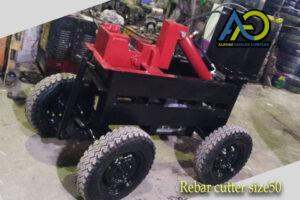
Rebar Cutter Size 50
Our heaviest model; hydraulic cutting of bars up to Ø50 mm — for bridges and industrial projects.
Instant price quote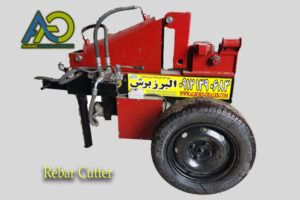
32 Rebar Cutter Two-Wheel
Compact two-wheel design; bending and cutting up to Ø32 mm — the most economical wheeled model.
Instant price quoteHow Alborz Ghaleb Builds Its Cutters
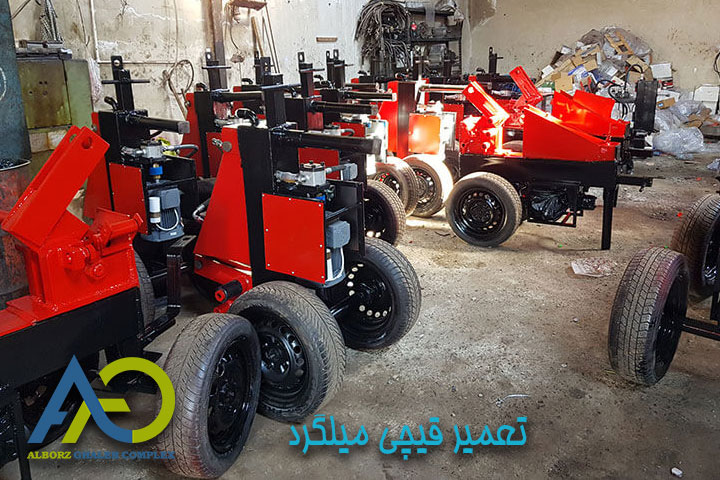
Production runs in six steps: engineering design per customer need → material selection (alloy-steel blades and body, standard motors) → cutting & welding → assembly (motor, hydraulic pump, industrial wheels, control panel) → quality control (heavy-load cut tests up to Ø50) → anti-rust painting & packing.
Main components
- Blade: alloy steel 50×50×20 or 60×60×25 mm with carbon facing — the heart of the machine, re-sharpenable, 4 cutting edges;
- Fixed & moving jaws: hold and guide the bar;
- Motor: 3 HP, 1,400 rpm (single/three-phase);
- Hydraulic pump: up to 700 bar on hydraulic models;
- Chassis & wheels: robust body, two/four industrial wheels;
- Control panel: safe operation and motor protection.
💡 Blade and pump quality extend machine life to 10 years.
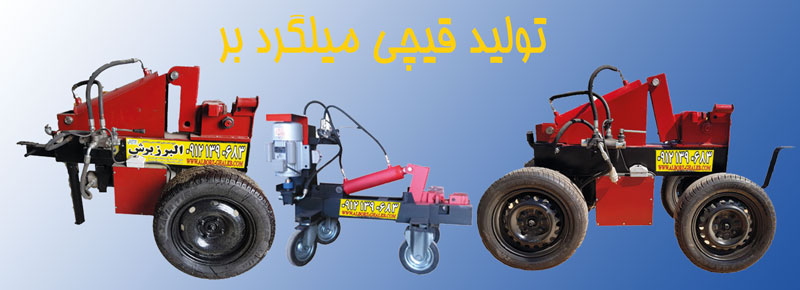
The Electric 32 2-in-1 Bender-Cutter: Iran's Best-Selling Machine
The electric 32 2-in-1 rebar machine is one of the most popular cutting machines on the market. It both cuts and bends rebar and is produced in different power ratings for construction and industrial workshops. The hydraulic version is a true bestseller: powered by a hydraulic drive, it cuts and bends all bar types and ships in two models — single-phase hydraulic and three-phase hydraulic. Its key advantages over older manual tools are dramatically higher productivity and better accuracy.
Production speed
For production sites that do not need extreme speed, this series is a cost-effective, capable option — and thanks to its fair price it is the most widely used class on the market. It cuts and bends faster than legacy machines, comes with after-sales service and warranty, and ships to every region.
Cutter blades
The machine uses steel blades for smooth, easy cutting and a 3 HP single- or three-phase motor, with a strong hydraulic jack, side bending and reinforcement cutting capability. Known also as the "bend-and-cut shear", it is one of the construction industry's essential machines. Blades are replaceable and re-sharpenable; each blade has 4 cutting edges and can be rotated for multiple lives.
Choosing among cutter types
Most construction companies buy several models matched to their needs — today the market offers side-bending machines, top-bending machines and stirrup-bender cutters, all widely used in building construction and concrete structures. Power supply is single- or three-phase mains; some market models are still manual, where the worker swings a lever arm to cut or bend. On large projects such as tower construction or industrial structures that demand speed and precision, electric and hydraulic machines are irreplaceable.
Maintenance, Troubleshooting and Safety
Care schedule for a 10-year life
- Daily: clean blades, oil joints, check bolts;
- Weekly: sharpen blade, check hydraulic oil, test safety systems;
- Monthly: angle calibration, oil filter change, electrical insulation check;
- Every 6 months: motor inspection, hydraulic hoses (oil leaks), greasing;
- Storage: dry environment away from rain and humidity.
Quick troubleshooting
| Symptom | Likely cause | Fix |
|---|---|---|
| Crooked cut | dull blade / wrong gap | sharpen blade / adjust gap |
| Unusual noise | low oil / worn bearing | lubricate / replace bearing |
| Power loss | hydraulic pressure drop / weak motor | check pump / check power & motor |
Safety essentials
- PPE: goggles, cut-proof gloves, safety boots, ear protection;
- Before work: inspect cables/hoses/blade, level floor, clear area;
- During work: hands away from blade, bar perpendicular, full focus;
- After work: power off, clean, fit blade guard. Operators must be trained — free training comes with every purchase.
Buy Factory-Direct — Export Available
- Factory pricing with no middlemen + official proforma for companies;
- 6–12-month warranty + 10-year service, permanent blade and spare-part supply;
- Free operator training on delivery;
- Repairs for all brands, not only our own machines;
- Factory visit & live cut test before purchase in Karaj;
- Nationwide delivery and export to Iraq, Turkey, Armenia, Russia and CIS with official documents. Pair the machine with formwork accessories or browse the used marketplace for inspected second-hand units.
Rebar Cutters — FAQ
How much does a rebar cutter cost?
Single-phase or three-phase?
Electric gearbox vs hydraulic — what's the difference?
Is a 2-in-1 bender-cutter worth it?
What bar diameters can be cut?
What is the machine's service life?
Are blades replaceable?
Which cuts faster — mechanical or hydraulic?
Do you have regional dealers? How is delivery handled?
Do you export rebar cutters?
Get the Right Rebar Cutter Delivered
Send your bar diameter and site power type — our experts recommend the right model (single/three-phase, 2-in-1 or hydraulic 50) and return an official proforma. Warranty + free training + 10-year service + worldwide shipping.
Contact for price
Formwork Pins and Wedges | Factory Direct Supply

Formwork Tie Strap / Wall Tie Band – Alborz Ghaleb Factory Direct

Concrete Slab Roof Construction & Shoring Solutions
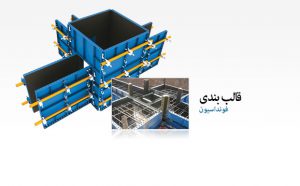
Metal Foundation Formwork | Steel Formwork for Concrete Footings
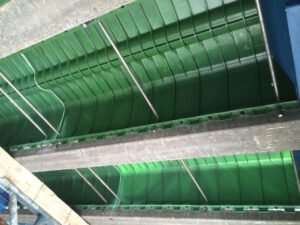
Lite Form Reusable Concrete Molds – Replace Polystyrene Blocks
Your opinion matters to us
Share your experience and thoughts with us and other users
No comments yet. Be the first!