What is modular plastic formwork?
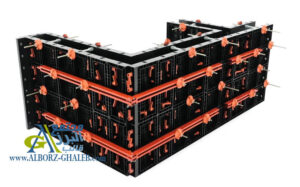
Modular plastic formwork is a reusable panel system made from engineered polymers. The panels are manufactured in repeatable dimensions, with edges, locking points, and surfaces designed to hold fresh concrete until it reaches the required shape and early strength. Unlike timber formwork, it is not cut and consumed on each job.
The real value appears in repetition. If a crew is forming similar footings, low walls, columns, slab edges, or light structural elements again and again, the panel cycle becomes predictable. The same panels can be cleaned, stacked, moved, and installed with less effort than heavier alternatives.
Formwork cost is never only the purchase price. Handling, cleaning, repair, storage, crane time, labor hours, and reuse count decide the true cost per pour.
How it differs from steel formwork
Steel formwork remains the strong workhorse for demanding concrete pressure, long service life, and heavy-duty applications. It performs extremely well when the project justifies its weight and initial investment. Plastic formwork, on the other hand, wins in light handling, moisture resistance, and quick cleaning.
A practical contractor does not ask, “Which system is universally better?” The right question is, “Which system fits this project cycle?” On many sites, the smartest answer is a mixed setup: steel panels for high-pressure zones and plastic panels for repetitive, lighter zones.
Why contractors choose plastic modular panels
The first advantage is weight. A lighter panel means fewer workers are needed for handling, less fatigue, faster repositioning, and easier movement in narrow access areas. On projects without heavy lifting equipment, this alone can change the daily productivity rhythm.
The second advantage is cleaning. Plastic surfaces generally reduce concrete adhesion compared with timber and damaged plywood. That does not mean zero maintenance, but it usually means faster turnaround between pours.
The third advantage is moisture resistance. Plywood edges swell, timber absorbs water, and poor storage ruins panels quickly. Polymer panels tolerate humid environments better, which is especially useful near coastal zones, basements, wet sites, or long outdoor storage periods.
Labor productivity and site rhythm
Modularity makes crews faster because the pattern becomes familiar. Once the team understands the locking sequence, panel orientation, and bracing requirements, the installation process becomes repeatable. That reduces measuring errors and shortens the learning curve.
In practical terms, a site supervisor can plan panel cycles, reuse zones, and cleaning stations more accurately. Instead of improvising with timber cuts every day, the site follows a controlled kit-based process.
Technical behavior under fresh concrete pressure
Fresh concrete applies lateral pressure to formwork. That pressure depends on pour height, slump, placing speed, temperature, vibration, and mix behavior. A plastic panel must resist deformation enough to keep the final concrete line accurate and the surface acceptable.
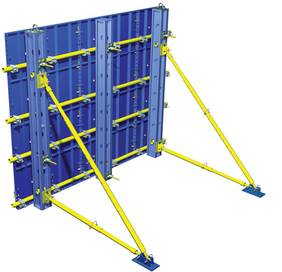
The most important technical details are panel stiffness, edge geometry, locking strength, tie spacing, backing support, and correct pouring speed. If any of these are ignored, lightweight panels may bulge, open at joints, or leak cement paste.
Lightweight does not mean “install without engineering.” Always check bracing, ties, alignment, and pour rate before concrete placement.
Polymer quality and long-term durability
Good polymer panels need impact resistance, dimensional stability, and surface durability. Construction sites are harsh: panels are dragged, stacked, dropped, exposed to sunlight, and cleaned under pressure. A high-quality panel survives that cycle without losing shape too quickly.
Before purchasing, inspect edges, locking areas, surface flatness, panel thickness, and previous field performance. The page plastic formwork systems is a useful internal reference for product selection.
Cost comparison: plastic, steel, timber, and plywood
A cheap panel can become expensive if it breaks early. A premium system can become economical if it is reused enough. The right financial model divides the total ownership cost by the number of successful pours, not by the number of panels purchased.
For example, if plastic panels are reused dozens of times with lower cleaning and handling cost, the cost per use can become attractive. If the job is a one-off heavy wall with high pressure, steel may still be the better investment.
| System | Typical Weight | Reuse Potential | Assembly Speed | Moisture Resistance | Best Use Case |
|---|
| Modular plastic | Low | Medium to high | High | Very good | Repeated light-to-medium concrete work |
| Modular steel | High | Very high | Medium to high | Good with maintenance | Heavy-duty structural work |
| Timber | Medium | Low | Craft-dependent | Poor | Custom small details |
| Plywood | Medium | Medium | Good | Moderate | Flat surfaces and slab work |







Your opinion matters to us
Share your experience and thoughts with us and other users
No comments yet. Be the first!