Types of Shear Wall Formwork: Which is Right for Your Project?
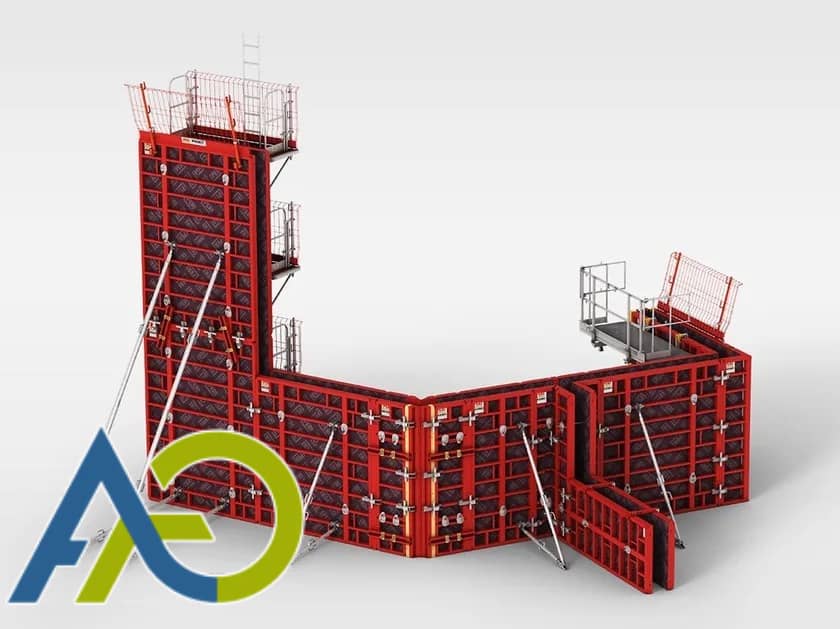
Choosing the right formwork depends on project scale, budget, and technical requirements. Based on Alborz Formwork’s offerings and competitor analysis, here are the main types:
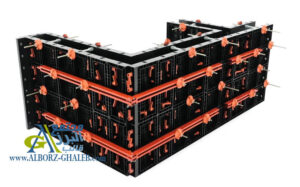
1. Modular Metal Formwork
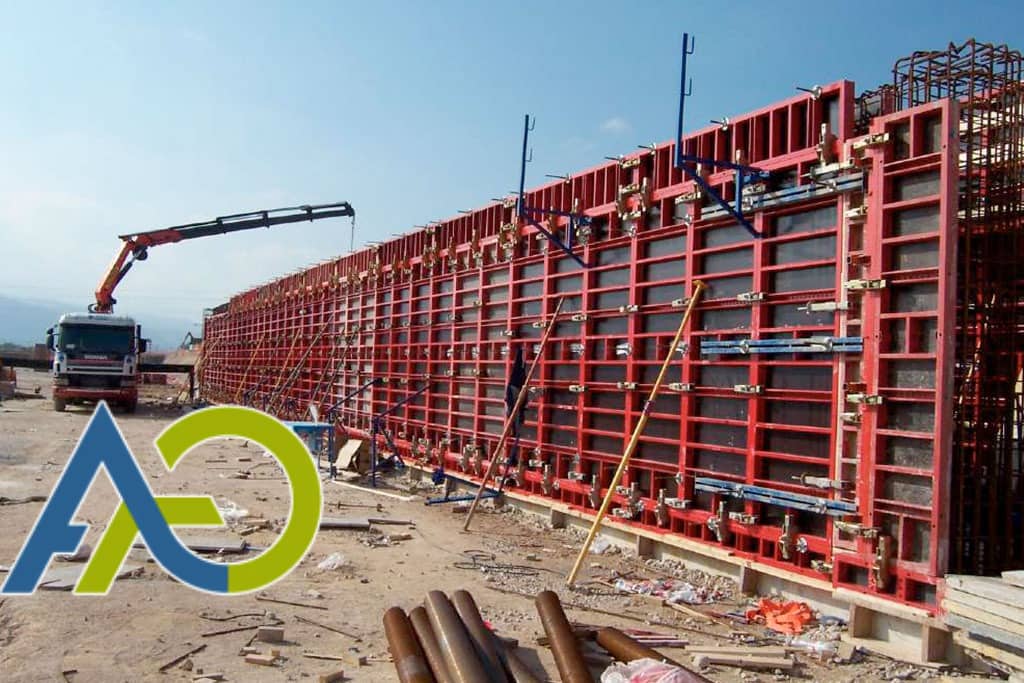
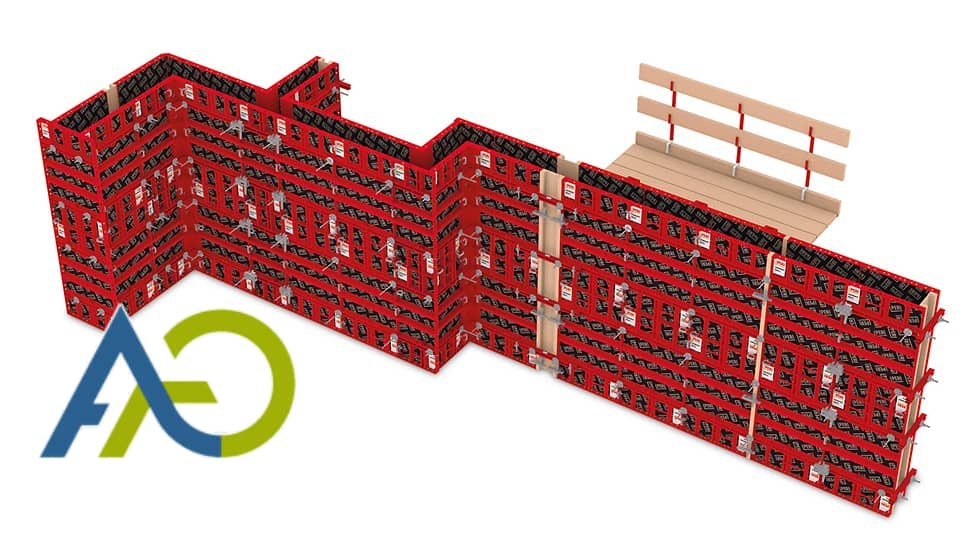
The most widely used option for shear walls, modular metal formwork offers versatility and standardization.
- Material: ST-37 steel sheets (3mm thickness).
- Dimensions: Widths 10-50 cm (in 5cm increments), lengths 1, 1.5, 2 meters.
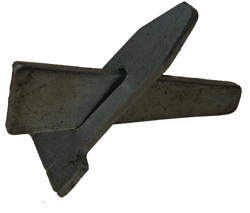
- Connections: Pins and wedges, frog pins.
- Edge Types: 5cm edge (lighter, 18-20 kg for 100*50) or 6cm edge (stronger, 22-25 kg).
- Advantages: High strength, up to 150 uses, smooth surface for exposed concrete.
- Disadvantages: Higher initial cost, heavier than plastic.
- Applications: Tall shear walls, foundations, columns.
2. Large-Panel Metal Formwork
Designed for large-scale projects, this system minimizes connections for faster execution.
- Material: Thicker steel sheets (4-5mm).
- Dimensions: Large panels (up to 3*2 meters).
- Advantages: High speed, reduced concrete leakage, ideal for tall walls.
- Disadvantages: Higher cost, requires cranes for handling.
- Applications: Industrial projects, dams.
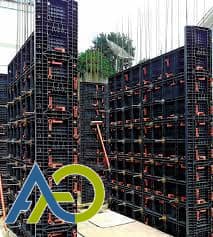
3. Plastic Polymer Formwork
A lighter alternative for smaller projects.
- Material: Virgin or recycled polyethylene.
- Dimensions: 100*50, 100*20 cm.
- Advantages: Lightweight, no oiling needed, moisture-resistant.
- Disadvantages: Lower strength (up to 100 uses), unsuitable for large walls.
- Applications: Short shear walls, residential projects.
4. Timber Formwork
An economical choice for limited projects.
- Material: Plywood or multi-ply boards.
- Advantages: Low cost, lightweight.
- Disadvantages: Short lifespan (5-10 uses), moisture-sensitive.
- Applications: Small shear walls in local projects.
Comparison of Formwork Types
| Formwork Type | Strength | Durability | Initial Cost | Application |
|---|
| Modular Metal | High | 150 uses | High | Large shear walls |
| Large-Panel Metal | Very High | 200 uses | Very High | Industrial projects |
| Plastic | Medium | 100 uses | Medium | Small walls |
| Timber | Low | 5-10 uses | Low | Local projects |
For tall shear walls and large projects, Alborz Formwork’s modular metal systems are the top choice due to their strength and longevity.
Shear Wall Formwork Steps: A Step-by-Step Guide
Shear wall formwork is a precise process requiring careful planning. Below are the key steps, aligned with Alborz Formwork’s standards:
1. Preparation
Engineering drawings are reviewed, and appropriate formwork is selected based on wall height, concrete pressure, and connection types. Alborz Formwork’s modular systems (e.g., 100*50 or 200*50 cm) are ideal for this stage.
- Review structural plans.
- Choose formwork (5cm or 6cm edge).
- Prepare equipment (pins, wedges, clamps).
2. Formwork Installation
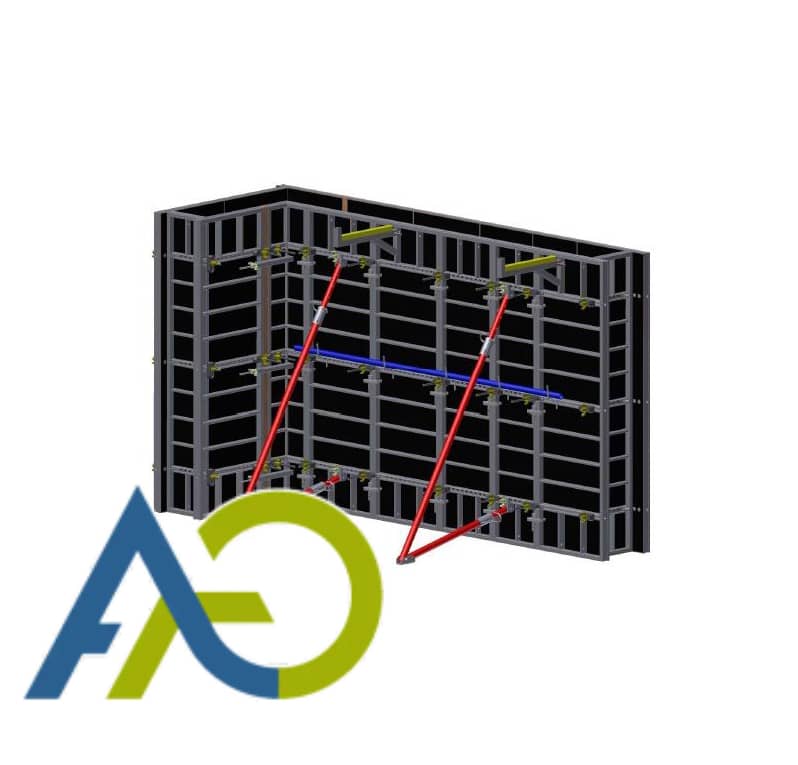
Metal forms are assembled using pins, wedges, or clamps. Ensuring level alignment prevents concrete leakage.
- Install flat and corner forms.
- Use bracing props for stability.
- Check angles and dimensions.
3. Concrete Pouring
Concrete is poured gradually with proper vibration to eliminate air pockets. Alborz Formwork’s smooth metal forms enhance the final concrete quality.
- Use concrete with suitable strength (e.g., C30).
- Monitor concrete pressure to prevent form deformation.
- Vibrate for proper compaction.
4. Formwork Removal
After full concrete curing (7-14 days, depending on conditions), forms are carefully removed. Modular forms are easily dismantled due to their standardized design.
- Remove pins and wedges.
- Detach forms without damaging concrete.
- Clean forms for reuse.
These steps, executed with Alborz Formwork’s systems, ensure speed and precision in your projects.
Shear Wall Formwork Prices in 2025
Formwork prices depend on factors like steel sheet type, production method (welded or bent-edge), and dimensions. Based on Alborz Formwork’s data and competitor insights approximate 2025 prices are:
Modular Metal Formwork
- 5cm edge welded: $1.8-$2.0
- 5cm edge bent: $2.1-$2.3
- 6cm edge welded: $2.0-$2.2
Approximate Weights
- 100*50 cm (5cm edge): 18-20 kg.
- 100*50 cm (6cm edge): 22-25 kg.
- 200*50 cm (5cm edge): 35-40 kg.
Factors Affecting Prices
- Steel sheet price fluctuations.
- Weld quality (CO2 vs. manual).
- Anti-rust coating.
- Custom dimensions.
Tip: Contact Alborz Formwork for accurate pricing and quotes. Market fluctuations may impact costs.
Request a QuoteKey Tips for Buying Shear Wall Formwork
Choosing the right formwork reduces costs and enhances project quality. Here are essential tips:
- Material Quality: Ensure forms use ST-37 steel sheets (preferably from reputable suppliers) with CO2 welding for durability.
- Robust Connections: Pins, wedges, or clamps must withstand pressure.
- Second-Hand Forms: Up to 30% cheaper, but check welds, surface condition, and rust.
- Warranty & Support: Manufacturers like Alborz Formwork offer reliable after-sales service.
- Project Fit: Use 6cm edge or large-panel forms for tall walls; 5cm edge for medium projects.
- Technical Consultation: Consult Alborz Formwork’s experts to select the best system for your project.
These tips ensure a smart investment and high-quality structures.
Real-World Applications of Metal Formwork
Alborz Formwork’s metal systems have been used in major Iranian projects. Here are a few examples:
- Milad Tower, Tehran: 6cm edge modular forms for core shear walls ensured precision and strength.
- Karun 3 Dam: Large-panel forms for massive shear walls improved speed and quality.
- Tabiat Bridge, Tehran: Corner and flat forms for complex concrete bases.
These projects highlight the industry’s trust in Alborz Formwork’s quality.
Maintenance and Safety in Shear Wall Formwork
Proper maintenance and safety practices extend formwork lifespan and ensure site safety.
Formwork Maintenance
- Cleaning: Remove residual concrete with water and a brush after each use.
- Oiling: Apply form oil before pouring to prevent sticking.
- Storage: Store in a dry, moisture-free environment.
- Coating: Use anti-rust paint to prevent corrosion.
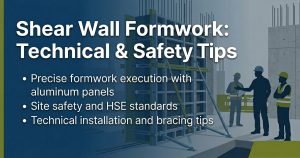
Safety Tips
- Ensure secure connections (pins, wedges).
- Wear safety gear (helmets, gloves, boots) during installation/removal.
- Use cranes for heavy forms.
- Check form alignment and stability before pouring.
These practices promote safe and efficient project execution.
Frequently Asked Questions (FAQs)
What is the best formwork for shear walls?
Is buying second-hand formwork cost-effective?
How can I prevent concrete leakage?
Are metal forms suitable for exposed concrete?
What’s the difference between 5cm and 6cm edge forms?
How do I maintain formwork?
Conclusion: Why Choose Alborz Formwork?
Shear wall formwork is critical for building strong, safe concrete structures. Alborz Formwork’s modular metal systems, with high strength, up to 150 uses, and smooth surfaces, are the go-to choice for projects of all sizes. From high-rise towers to massive dams, our products have proven their reliability in Iran’s landmark projects.
To choose the right formwork, consider material quality, connections, and project needs. Contact Alborz Formwork’s team for free consultation and 2025 pricing. Take the next step toward a successful project today!



Your opinion matters to us
Share your experience and thoughts with us and other users
No comments yet. Be the first!